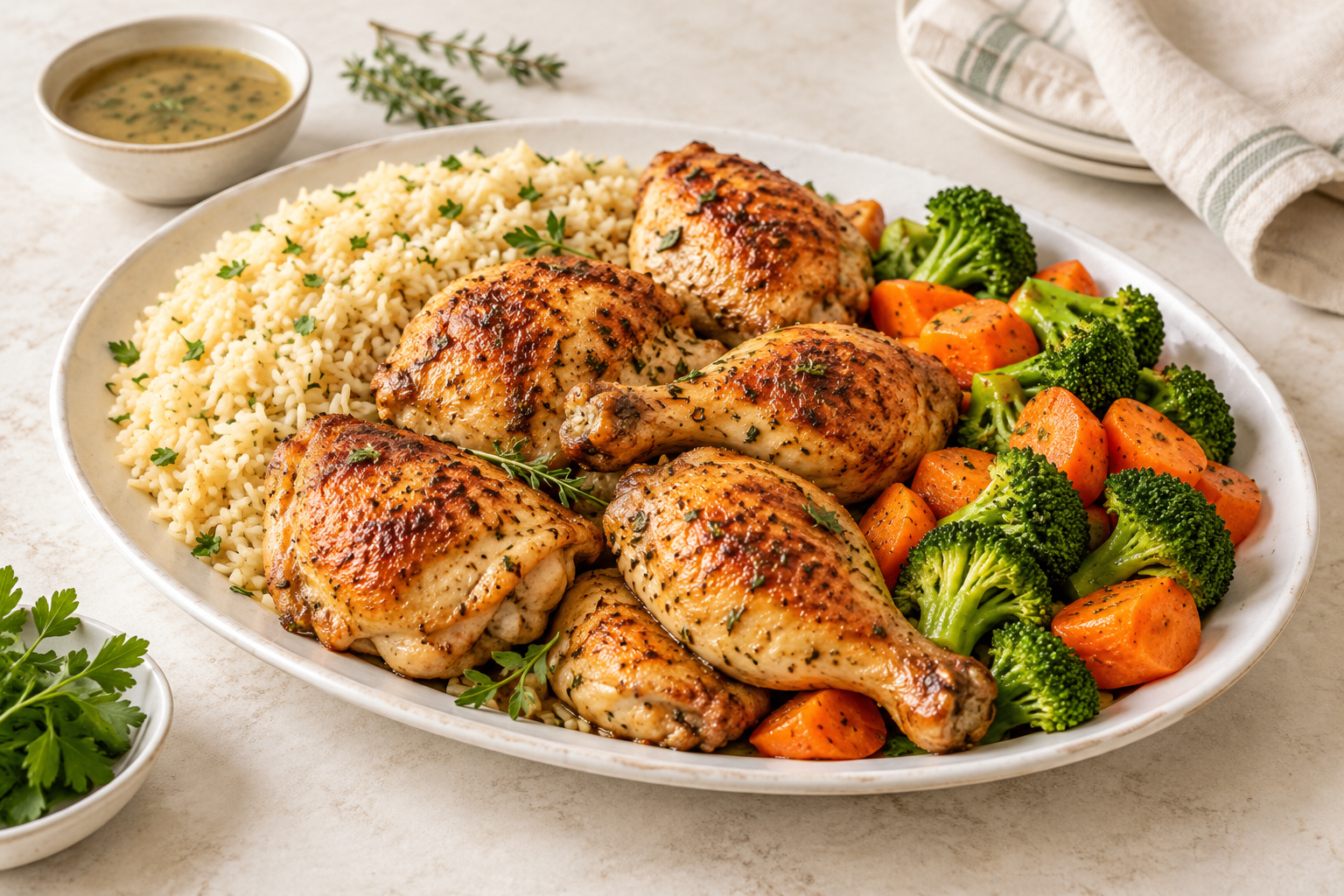
At 5:30, “What should we eat?” can feel like several questions at once. What do we have? What will feel familiar to my child? And can I make it without cooking two separate dinners?
This 7-day picky eater meal plan puts those decisions in one place: six dinners, one planned repeat, a combined grocery list with quantities, and a short midweek reset. The aim is a week you can shop for and adjust—not seven promises that your child will clear their plate.
How to use it: quantities are a starting point for two adults and two children, with appetites varying. This is a dinner plan, not a complete nutrition plan. Adjust portions, allergies and textures to your household. The cooking instructions are proposed home-cooking preparations, not kitchen-tested recipes.
Build the week around your actual family
Before you buy anything, write down three foods your child currently eats. Be specific: “short pasta with no sauce” is more useful than “carbs.” Then mark your two busiest evenings. Put a fast dinner on those days, even if that means Wednesday happens on Monday.
Check each menu row for a genuinely familiar component. If there isn’t one, replace the starch or choose another meal before shopping. You don’t need to introduce fish, lentils and a different grain in the same week just because they appear here.
The American Academy of Pediatrics recommends regular meal and snack times, including a liked food, and letting children choose what and how much to eat from what is offered. Its practical guidance for picky eaters supports keeping meals predictable without bargaining over bites.
Your 7-day picky eater meal plan
Chicken rice plates, quesadillas and pita pizzas will be familiar from our dinner ideas for picky eaters. Here, they share a shopping list with sweet potato–lentil soup, salmon couscous plates and turkey–zucchini patties. The value is in the week’s organization: what to buy, when to cook it and how to swap a dinner without buying an entirely new set of ingredients.
| Day | Dinner | Keep separate | Planning connection |
|---|---|---|---|
| Monday | Chicken, rice and soft carrots | Rice, chicken and carrots | Use half the carrots; keep the rest raw for Tuesday |
| Tuesday | Sweet potato–red lentil soup with toast | Toast and a small bowl of soup | Make only what you need, or freeze suitable extra portions |
| Wednesday | Bean and cheese quesadillas with peas | Beans can sit beside a cheese-only quesadilla | Save the second unopened can of beans for Sunday |
| Thursday | Salmon, couscous and broccoli | Fish, grain, broccoli and lemon | Cook fish bought fresh midweek or thawed safely |
| Friday | Turkey–zucchini patties with toast and peas | Patties, toast and peas | Use part of the same loaf; freeze remaining bread if needed |
| Saturday | Pita pizzas with broccoli | Choose toppings before assembling | Use cheese and the remaining frozen broccoli |
| Sunday | Repeat Wednesday’s quesadillas | Keep the version your family preferred | Use fresh ingredients, not Wednesday’s refrigerated finished meal |
What to cook each night
Monday: Chicken, rice and soft carrots
Start 1 cup dry rice according to its package. Cut ½ lb carrots into even pieces and steam until soft. Cook 1 lb boneless chicken with a little oil and your usual mild seasoning, using a thermometer to check it reaches 165°F/74°C. Cooking time depends on the cut and thickness.
Reserve plain rice before adding anything to it. At the table, one person can combine the meal while another keeps three separate portions. If your child’s familiar food is bread rather than rice, make that change on the shopping list first. Keep the other ½ lb of carrots uncooked and refrigerated for tomorrow.
Tuesday: Sweet potato–red lentil soup with toast
Peel and dice 1 lb sweet potato and the remaining ½ lb carrots. Put them in a saucepan with ¾ cup rinsed dry red lentils and 4 cups lower-sodium broth. Bring to a boil, then simmer gently until the lentils break down and the vegetables are soft, roughly 20–25 minutes depending on size. Stir occasionally and add water if needed. Blend carefully off the heat with an immersion blender, keeping the blade submerged, or mash for a thicker texture. Serve with 4 slices of toast.
Soup may be entirely unfamiliar to your child. If toast is accepted, keep it dry and offer soup in a separate small bowl; dipping is optional. Don’t describe the soup as something it isn’t. “Sweet potato and lentil soup” is enough. If neither component is familiar, choose a different dinner rather than hoping hunger will make this one work.
Wednesday: Quesadillas that don’t require everyone to like beans
Drain and rinse one 15-oz can of beans, then mash them. Divide the beans and 1 cup grated cheese between 4 medium tortillas, fold and cook in a lightly oiled skillet over medium heat until hot inside and lightly browned, turning carefully. Cook 1 cup frozen peas separately according to the packet.
Before filling all four tortillas, make any cheese-only portions needed and serve beans alongside. Keep Sunday’s beans unopened. Sunday’s cheese can stay in its package only within the label’s storage advice; freeze a portion if necessary. Planning a repeat doesn’t mean keeping tonight’s finished meal until the weekend.
Thursday: Salmon and couscous, with lemon at the table
Heat the oven to 400°F/200°C. Put 1 lb boneless salmon fillets in a lightly oiled baking dish and bake until the thickest part reaches 145°F/63°C; begin checking around 12 minutes, but use temperature rather than a fixed timer. Meanwhile, prepare 1 cup dry couscous according to its package and cook 12 oz frozen broccoli until suitably tender. Flake the fish and check carefully for bones. Serve lemon wedges separately.
For a child who knows rice but not couscous, swap the grain rather than changing the whole dinner. If fish isn’t suitable, use chicken and follow its different cooking temperature. Write the replacement quantity on your list—“we’ll find something else” is how a planned dinner becomes a second grocery trip.
Friday: Turkey–zucchini patties with toast
Grate one medium zucchini, squeeze it firmly in a clean towel and measure about ½ cup packed squeezed zucchini. Mix with 1 lb ground turkey, 1 egg, ⅓ cup quick oats and a mild seasoning you use at home. Shape into eight similar-sized patties. Cook in a lightly oiled nonstick skillet over medium heat, turning carefully, until each patty reaches 165°F/74°C. If browning too fast, lower the heat and continue cooking. Serve with 4 slices of toast and 1 cup cooked peas.
Call them turkey–zucchini patties, rather than hiding the vegetable. If visible green pieces are likely to make a familiar protein unrecognizable, leave the zucchini out and cook it separately. Keep the egg and oats in the plain patties. These ingredients need their own allergy checks; this isn’t an egg-free or automatically gluten-free meal.
Saturday: Pita pizzas with a small topping choice
Spread ¾ cup tomato sauce across 4 small pitas, then divide 1 cup grated cheese between them. Bake at 400°F/200°C until the cheese melts and the bread is heated through, checking from about 8 minutes. Cook the remaining 12 oz frozen broccoli separately.
Let a child choose between sauce-and-cheese and cheese-only before assembly. Two available options are easier to manage than an open-ended pizza order. If you need different breads or a dairy-free alternative, adjust both this dinner and the quesadillas when shopping.
Sunday: Repeat, then write down one useful thing
Make Wednesday’s quesadillas again using 4 tortillas, the second can of beans, 1 cup cheese and 1 cup peas. The grocery totals below include this repeat. If you’re repeating a different dinner, replace Sunday’s ingredients rather than buying both versions.
Make one note for next week: “cheese separate,” “smaller soup portion,” or “fish night needs familiar bread.” Avoid a scorecard of bites eaten. A practical note helps you make the next meal; a verdict on the whole evening rarely does.
One grocery list, with quantities and a purpose
These totals cover the sample dinners exactly as written, including Sunday’s repeat. They are starting amounts for two adults and two children, not prescribed serving sizes. Increase what your household needs, subtract pantry supplies, and add breakfast, lunch and snacks separately.
| Buy or check | Amount for this plan | Where it goes |
|---|---|---|
| Boneless chicken | 1 lb / about 450 g | Monday |
| Boneless salmon | 1 lb / about 450 g | Thursday |
| Ground turkey | 1 lb / about 450 g | Friday |
| Egg | 1 | Friday’s patties |
| Canned beans | Two 15-oz cans | One each Wednesday and Sunday |
| Dry red lentils | ¾ cup | Tuesday |
| Grated cheese | 3 cups total | 1 cup each Wednesday, Saturday and Sunday |
| Dry rice | 1 cup | Monday |
| Dry couscous | 1 cup | Thursday; replace if using another grain |
| Quick oats | ⅓ cup | Friday’s patties |
| Medium tortillas | 8 | 4 each Wednesday and Sunday |
| Small pitas | 4 | Saturday |
| Sliced bread | At least 8 slices | 4 each Tuesday and Friday |
| Carrots | 1 lb / about 450 g | ½ lb Monday; ½ lb Tuesday |
| Sweet potato | 1 lb / about 450 g | Tuesday |
| Zucchini | 1 medium | Friday; use ½ cup after squeezing |
| Frozen peas | 3 cups | 1 cup each Wednesday, Friday and Sunday |
| Frozen broccoli | 24 oz / about 680 g | 12 oz each Thursday and Saturday |
| Lemon | 1 | Thursday, optional |
| Lower-sodium broth | 4 cups / about 950 ml | Tuesday |
| Tomato sauce | ¾ cup | Saturday; freeze suitable excess |
| Cooking oil and familiar seasonings | Check what you have | As needed for cooking |
A quick audit: three cheese dinners × 1 cup = 3 cups. Two quesadilla dinners × 4 tortillas = 8 tortillas. These are the ingredients most easily undercounted when meals are planned separately.
For a smaller household, halve each preparation rather than cooking four servings automatically. For larger appetites, scale up and update the totals. Budget swaps such as chicken instead of salmon are fine; keep the cooking instructions appropriate to the ingredient actually used.
The prep plan: one setup, one midweek reset
Before the week starts
- Check which nights need to move. If Friday is busy, move the patties to a calmer evening and put quesadillas on Friday.
- Measure dry rice, lentils, oats and couscous into separate labeled containers if that saves you effort. Don’t cook the full week’s grains in advance.
- Check packages for storage instructions. Buy fish and turkey midweek, or freeze them promptly and allow enough time for refrigerator thawing before their cooking days.
- Keep raw meat and fish sealed away from ready-to-eat foods. Freeze bread portions you won’t use while fresh.
On Wednesday: a five-minute check
Look at Thursday through Sunday. Are the fish and turkey available and safely thawing in time? Is there still enough cheese? Do you have the second can of beans? If a dinner has moved, update the menu now. The reset is a stock check, not another cooking session.
For storage and thawing, follow FoodSafety.gov’s food-safety steps: refrigerate perishables promptly in shallow containers, within two hours or one hour above 90°F/32°C. Keep the refrigerator at 40°F/4°C or below. Use its cold-storage chart for ingredient limits; freeze suitable portions intended for later. Check meat, fish and reheated leftovers against the safe cooking temperature chart.
When dinner is refused—or the evening falls apart
These are two different planning problems. A child rejecting a meal needs a calm response. A late meeting or an empty fridge needs a practical menu change.
| What happened | What to do now | What to change next time |
|---|---|---|
| Your child wants the food plain | Offer the familiar component already available without negotiating over bites | Reserve it before sauce, toppings or filling are added |
| The whole dinner feels unfamiliar | Keep the response calm; follow your usual feeding routine and any professional guidance | Check the familiar-food column before selecting the meal |
| You have less cooking time than planned | Move a faster dinner into tonight’s slot | Move its ingredients and prep notes with it; see our quick-meal guide below |
| An ingredient was not thawed in time | Choose a dinner using safely available ingredients; do not thaw meat on the counter | Put a thawing reminder beside the menu |
| You changed Sunday’s repeat | Use the chosen dinner’s current ingredients and safe storage limits | Replace Sunday’s quantities in the shopping list |
| The portion was too big | Offer more if wanted; don’t require the plate to be finished | Write down a more realistic household cooking quantity |
For a time problem, our easy meals under 30 minutes gives you alternatives. For serving the same preparation in different ways, use one dinner with flexible plates. Neither requires restarting your entire week.
One sentence can be enough at the table: “The rice is here and the chicken is beside it. You can choose from what’s offered.” You don’t need to sell every ingredient. If eating involves ongoing pain, swallowing difficulties, significant distress or concerns about growth, speak with your child’s healthcare professional rather than relying on a meal plan.
A note on ages and allergies
This is not a ready-to-serve toddler menu. Adapt food size, shape and texture to your child’s eating skills. Whole beans, hard produce, large pieces of meat or cheese, and fish bones can pose choking risks. Keep children seated upright and supervise meals, following the CDC’s choking-prevention guidance. Our toddler meal ideas provide more age-focused examples.
The sample menu includes milk, wheat, egg and fish. Check broth, sauce, breads and other packaged ingredients too. An allergy substitution can change how a dish cooks; use a suitable recipe rather than assuming every replacement works one-for-one.
Frequently asked questions
Is this a full picky eater meal plan or just dinners?
It covers seven dinners only. Breakfasts, lunches, snacks and drinks aren’t included, and the quantities aren’t an individual nutrition prescription. The shopping list covers the sample preparations, with Sunday already counted.
Can I use this if my child only accepts a few foods?
Start by checking whether each dinner has a currently accepted component. Replace meals that don’t fit rather than using the plan to force unfamiliar food. A very limited or shrinking range of foods, especially with distress or growth concerns, deserves individual professional advice.
Can I meal-prep the whole week on Sunday?
You can organize ingredients, but don’t assume seven days of cooked food will remain suitable in the refrigerator. This plan uses fresh cooking, frozen ingredients and a midweek check. Use official storage limits for each ingredient and freeze suitable portions when needed.
Why does the plan repeat a dinner?
The repeat reduces shopping complexity and gives you one less decision. It also lets you adjust a familiar preparation based on what you noticed earlier. You can replace it; just revise the grocery quantities so the list still matches your week.
What if I only want a three-day plan?
Choose three menu rows, keep their ingredients and cross out the rest. Monday, Wednesday and Saturday give you a simple starting rotation. The full shopping table shows exactly which quantities belong to which night.
Choose the planning format you will actually use
You can also start with a piece of paper. Pick three dinners, write the familiar component beside each, and total the ingredients they share. That is enough to make tomorrow’s dinner easier to organize.