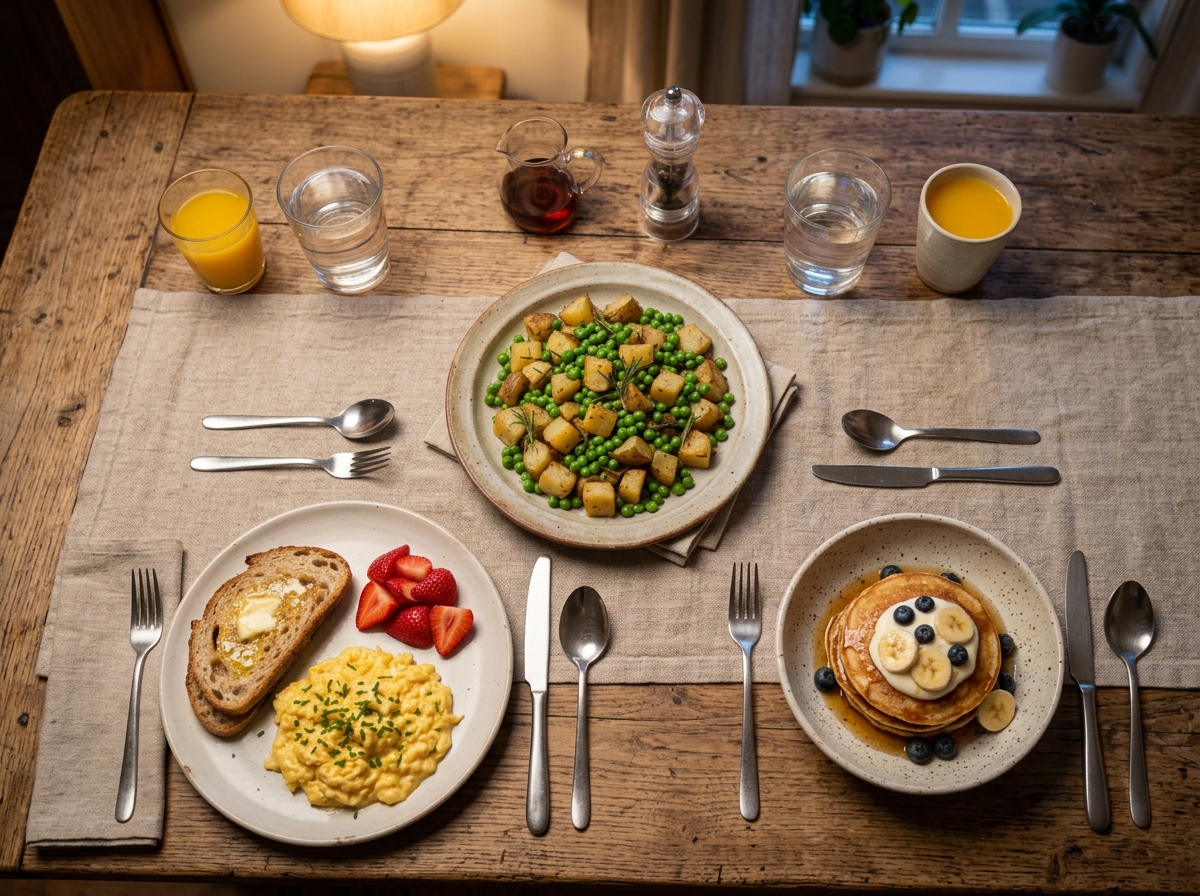
Breakfast for dinner ideas are useful on the evenings when cooking a completely new meal sounds harder than opening the fridge. Eggs, toast, oats, fruit, yogurt and potatoes can become a real family dinner when you build a plate from a few familiar components. The point is not to make every meal look perfect. It is to make one manageable dinner that can be adjusted for the people at your table.
This guide gives you eight practical breakfast-for-dinner combinations, small-batch quantities, swaps for common ingredients, a five-night plan and ways to prepare ahead. The ideas are family meals, not a required feeding plan. Serve a portion that fits your child’s age, appetite and eating skills, and adapt texture for younger children. For more flexible evening meals, browse our kid-friendly dinner ideas. For nights when speed is your main concern, see our easy meals under 30 minutes guide.
Quantities below make roughly four modest servings, with sides and extra portions adjusted for your household. Times are estimates, not results of kitchen testing. Use doneness checks as well as the clock.
Table of Contents
A simple formula for breakfast for dinner ideas
Start with a familiar base: toast, pancakes, oats, potatoes or a tortilla. Add one protein such as egg, beans, yogurt, cheese, chicken or tofu. Finish with fruit or a tender vegetable. Adults can add hot sauce, salad, extra seasoning or a larger portion separately. This keeps the meal shared without asking every person to eat exactly the same plate.
For younger children, keep foods soft and easy to manage: grate firm cheese, cut soft fruit appropriately, cook vegetables until tender and avoid serving hard or round choking hazards whole. The CDC’s choking-hazards guidance is a useful reference when choosing size and texture.
1. Soft scrambled eggs, toast and berries
For four small family servings, whisk 8 eggs with 2 tablespoons milk or water and a pinch of salt for the adult portion. Melt 1 teaspoon butter or olive oil in a nonstick skillet over low heat. Cook slowly, moving the eggs gently until firm throughout with no runny egg. Serve with 4 slices toast and 2 cups sliced strawberries or ripe, soft pear.
Make it work for your family: Add grated cheese at the end, or offer cheese beside the eggs. For an egg-free plate, warm mashed white beans with a little olive oil and mild seasoning. If toast is not a favorite, use a soft tortilla or roasted potato cubes.
Prep shortcut: Slice fruit and grate cheese while the pan warms. Keep one plain portion aside before adding adult seasoning.
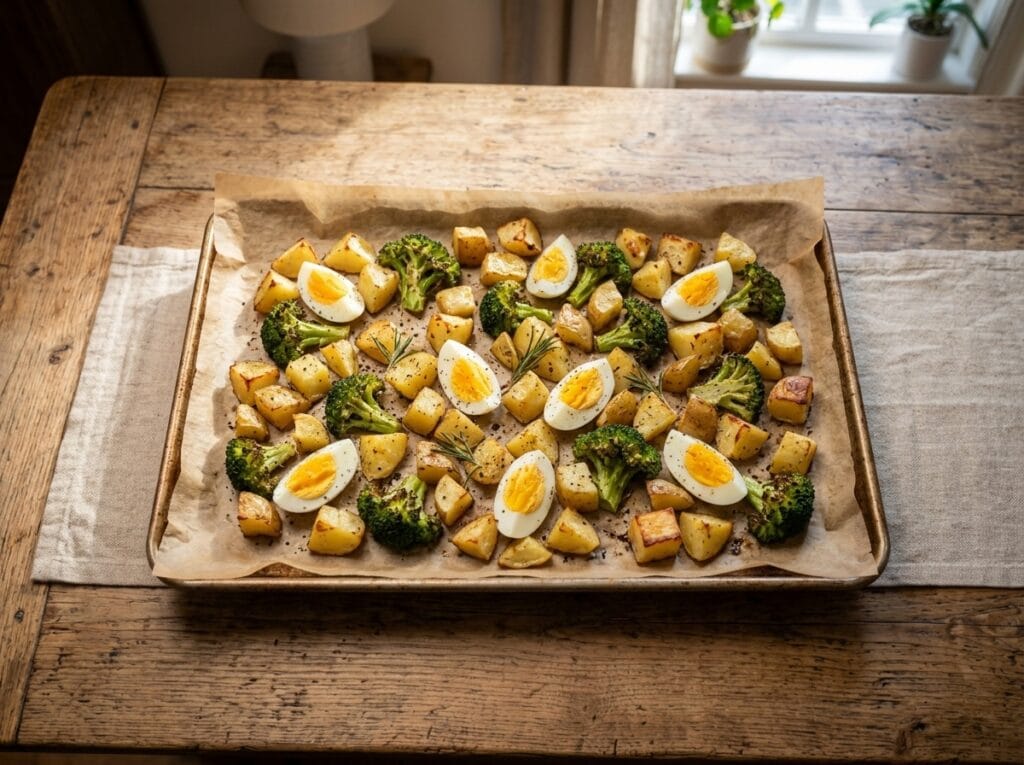
2. Sheet-pan potato, egg and vegetable plates
Heat the oven to 425°F / 220°C. Toss 1½ pounds cubed potatoes with 1 tablespoon oil and roast for 20 minutes. Add 2 cups small broccoli florets or thin zucchini half-moons, toss, then roast 10 to 12 minutes more until tender. Fully cook 6 eggs, with both whites and yolks firm, while the tray finishes. Serve potatoes, vegetables and egg in separate little sections with ketchup, plain yogurt or avocado if those are familiar.
Substitutions: Use sweet potato, frozen broccoli added near the end, or thawed peas warmed in a saucepan. Leftover chicken or black beans can replace eggs.
Why it is practical: The tray does most of the work, while each child can take a familiar item without the meal becoming a separate-menu night.
3. Banana-oat pancakes with yogurt and warm fruit
Mash 2 ripe bananas with 2 eggs, 1 cup rolled oats and ½ teaspoon cinnamon. For a smoother batter, blend the oats first, then combine everything and let it stand for 5 minutes. Cook 2-tablespoon portions in a lightly oiled skillet over medium-low heat. Flip once the underside holds together, and cook the other side until the center is set with no wet batter. Yield varies with size; expect roughly 12–16 small pancakes. Warm 2 cups frozen berries in a small pan until soft and spoon them over 1 cup plain yogurt.
Keep the texture gentle: Make pancakes small and soft rather than crisp. Mash berries for children who need a smoother texture. For a dairy-free option, use a tolerated nondairy yogurt; for an egg-free option, choose a pancake mix explicitly suitable for egg-free preparation and serve fruit and yogurt alongside.
Dinner upgrade: Add a side of shredded cooked chicken or mashed beans if your family wants a more substantial protein component.
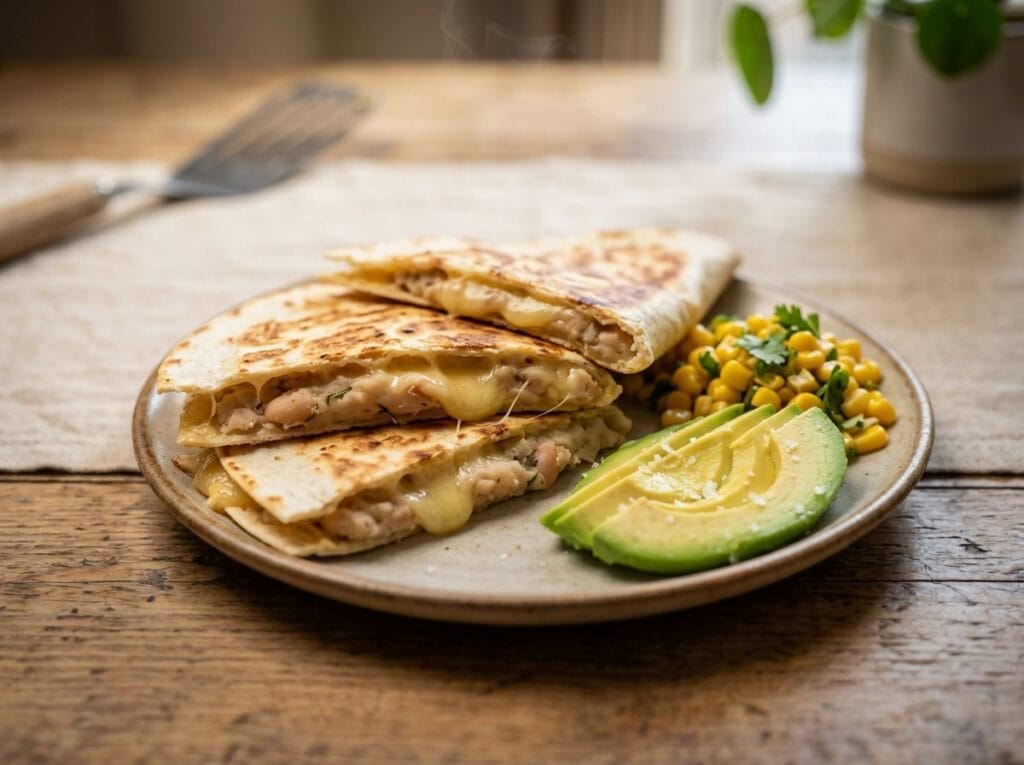
4. Breakfast quesadillas with beans and cheese
Mash 1 can drained white or black beans with 2 to 3 tablespoons water until spreadable. Spread a thin layer onto 4 small flour or corn tortillas, top with 1 cup grated cheese and fold. Warm in a lightly oiled skillet over medium-low heat until the filling is hot and the tortilla stays flexible. Cut into manageable wedges and serve with soft avocado and cooked corn or zucchini.
Swap it: Use scrambled egg instead of beans, or add a little shredded chicken. If a folded tortilla feels too difficult, offer beans, cheese and soft tortilla strips separately.
Make ahead: Mash the beans up to two days ahead and refrigerate in a covered container. Assemble and cook the quesadillas when ready to eat. To reuse these ingredients in another meal, try our toddler lunch ideas, adjusting portions for your household.
5. Savory oatmeal bowls
Cook 1½ cups rolled oats in 3 cups water or low-sodium broth according to the package. Stir in 1 cup grated cheddar or mild cheese and 1 cup finely chopped tender spinach during the final minute. Top bowls with a fully cooked egg, and offer children a small scoop with soft scrambled egg, beans or shredded chicken alongside. Add sliced ripe avocado or soft peaches for a fresh contrast.
If savory oats are new: Put a familiar item on the plate too, such as toast or fruit. Keep the oatmeal plain for the first exposure, then add cheese or vegetables in a separate portion.
6. French-toast sticks with chicken and fruit
Whisk 3 eggs with ½ cup milk and ½ teaspoon cinnamon. Dip 6 slices whole-grain bread briefly, then cook in a lightly buttered skillet over medium-low heat until the egg coating is fully cooked and the center is no longer wet; browning alone does not establish doneness. Cut into sticks. Serve with 2 cups thinly sliced ripe fruit and 1½ cups finely shredded cooked chicken or a side of yogurt.
This is a useful way to reuse cooked chicken from another meal without making the plate feel like leftovers. Offer maple syrup only for the people who enjoy it; yogurt or warm berries can add moisture without making every piece sticky.
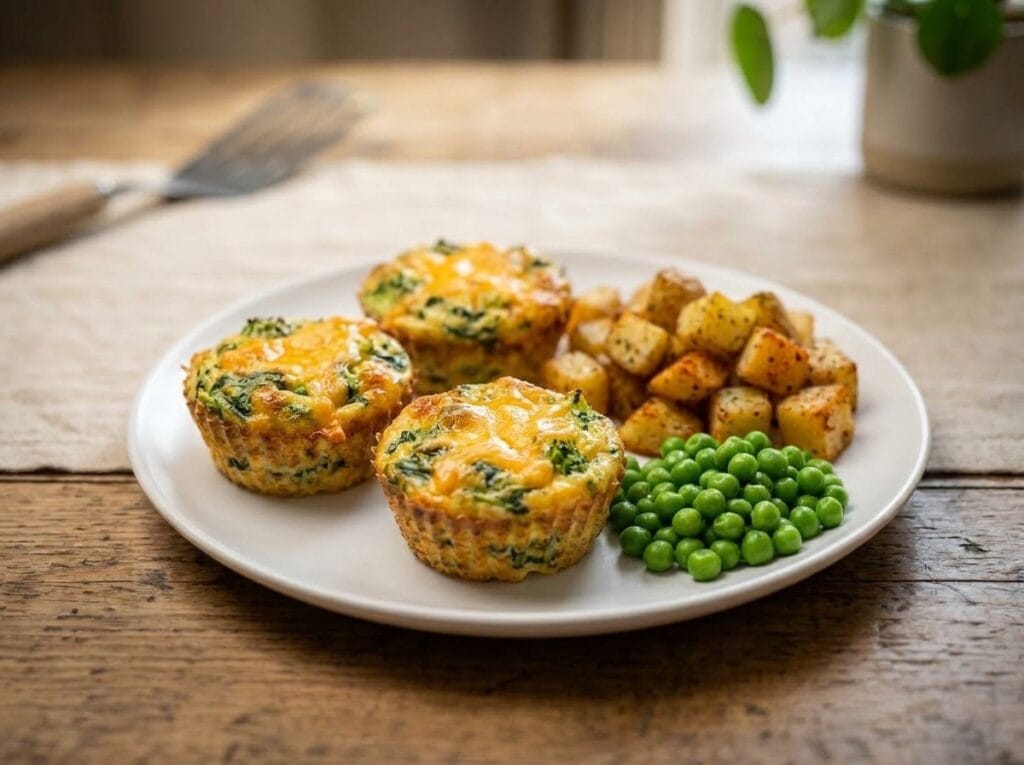
7. Egg muffins with potatoes and peas
Heat oven to 375°F / 190°C. Grease a 12-cup muffin tin. Whisk 10 eggs with ½ cup milk, ¾ cup grated cheese and 1 cup finely chopped cooked vegetables. Divide into cups and bake about 15 to 20 minutes, until set and the center reaches 160°F / 71°C on a food thermometer. Serve 2 or 3 egg muffins with roasted potatoes and warmed peas.
Make ahead: Cool promptly, refrigerate in a covered container and reheat only the portion you need until hot. The USDA’s leftovers guidance explains safe cooling, refrigeration and reheating practices. Do not leave a child’s partially eaten portion to save for later.
8. Yogurt, toast and a warm vegetable side
This is the lowest-effort option for an evening when you need to assemble rather than cook. Put out plain or lightly sweetened yogurt, buttered toast or pita, a familiar protein such as egg, cheese, chicken or beans, and a warm vegetable such as peas, tender carrots or zucchini. Add soft fruit. It is still dinner because it includes enough components for your household; it does not need a recipe name to count.
A five-night breakfast-for-dinner plan
Need more than tonight’s dinner idea?
Explore a two-week structure for easier family mealtimes.
Monday: Soft scrambled eggs, toast, strawberries and avocado.
Tuesday: Sheet-pan potatoes, broccoli and fully cooked eggs.
Wednesday: Bean-and-cheese quesadillas with soft zucchini.
Thursday: Banana-oat pancakes, yogurt and warm berries.
Friday: Egg muffins, peas and roasted potatoes.
Grocery list for those five dinners
For the listed recipes and roughly four modest servings per night, start with the amounts below. Add more bread, fruit or other familiar sides to match your household’s appetite.
- Eggs: 26 for the five recipes; buy 30 or 3 dozen to allow extras.
- Potatoes: About 3 pounds for Tuesday and Friday combined.
- Bread and tortillas: At least 4 slices bread and 4 small tortillas, plus extras.
- Rolled oats: 1 cup.
- Beans: One 15-ounce can.
- Plain yogurt: At least 1 cup for Thursday, more if used as a dip.
- Grated cheese: 1¾ cups for the quesadillas and egg muffins.
- Milk: About ⅔ cup, or use water in Monday’s eggs and ½ cup milk for Friday.
- Bananas: 2 ripe.
- Fruit: 2 cups strawberries and 2 cups frozen berries.
- Vegetables: 2 cups broccoli, 2 cups zucchini, 1 cup finely chopped cooked vegetables for the muffins, and 2 cups peas.
- Other: 1–2 avocados, oil or butter, cinnamon and your usual mild seasonings.
Check what you already have before shopping. This is a recipe shopping list, not a prescribed amount for a child to eat.
Make-ahead without making one big batch
Prep a few components, not five complete dinners. Grate cheese and portion oats first. Prepare fruit close enough to serving to preserve its texture. If you cook vegetables or potatoes in advance, label them with the cooking date and plan when they will be used.
Keep raw egg mixtures separate from ready-to-eat ingredients, and wash hands, utensils and counters after handling raw eggs. Cook scrambled eggs until firm, and egg dishes such as muffins to 160°F / 71°C. These checks follow USDA egg-safety guidance.
Refrigerate cooked leftovers within two hours, or within one hour when the surroundings are above 90°F / 32°C. Divide large amounts into shallow containers and keep the refrigerator at 40°F / 4°C or colder. Use refrigerated leftovers within three to four days; freeze portions intended for later. Reheat leftovers to 165°F / 74°C. See USDA leftovers guidance.
For this menu: do not assume Sunday’s cooked vegetables will still be suitable for Friday. Make Friday’s egg muffins later in the week, or freeze an earlier batch promptly. Reserve untouched portions before serving rather than mixing food from individual plates back into shared containers.
A 15-minute reset before dinner
When the evening is crowded, do not begin with a recipe. Choose pre-cooked potatoes to reheat, or skip potatoes tonight, set out plates and choose the protein first. While the eggs cook or the quesadilla warms, place fruit and a tender vegetable on the table. This order prevents the common problem of finishing the main food while still deciding on every side. It also gives a child time to see the familiar pieces before anyone talks about what should be eaten. A dinner can be simple, warm and complete without needing a themed menu or a separate plate for every person.
Let children help without turning dinner into a project
Offer one small task while you do the cooking: choosing between two fruits, arranging napkins, spreading cooled mashed beans on a tortilla, or counting toast slices. An older child can measure oats or whisk ingredients with supervision. Keep hot pans, sharp knives and raw egg handling under adult control.
Participation does not need to end with a bite. A child can help build a plate and still decide not to eat one component. Avoid presenting cooking as a bargain: “You made it, so you have to try it.” A simpler invitation is, “Would you like the fruit beside the toast or in a bowl?”
For younger children’s serving ideas beyond this menu, our toddler meals guide gives additional combinations. Use the child’s eating abilities, rather than the recipe name, to choose suitable textures.
Choose breakfast for dinner ideas by tonight’s constraint
You have about 10–15 minutes: Choose eggs and toast or the yogurt plate. Set out the cold components first, then cook the eggs so they reach the table warm.
You want fewer pans: Choose the potato tray, but allow around 35–45 minutes including preparation and oven heating. It is low on hands-on work, not necessarily the quickest meal.
You have no eggs: Choose bean quesadillas or savory oats with beans. Pancakes need a suitable egg-free recipe; simply removing eggs from the banana batter changes how it holds together.
Your child dislikes wet textures: Keep yogurt, warm berries and sauces beside toast or pancakes. Let each person combine them.
You need a bigger dinner: Scale the base and protein, and put extra portions on the table. The modest quantities in this guide are a starting point, especially if older children or hungry adults are eating.
When breakfast for dinner is not landing
A child refuses mixed foods. Serve eggs, potatoes and vegetables apart. A separated plate is not a failed meal.
The meal feels too light. Add beans, chicken, yogurt or an extra egg; adults can add a side salad or larger serving.
You have almost no time. Use the yogurt-and-toast plate or eggs with pre-cooked vegetables. Move the sheet-pan meal to another evening.
Breakfast foods are already a hard sell. Choose one familiar dinner component, such as potatoes or chicken, and pair it with a very small breakfast-food portion. Repeated neutral exposure can be more realistic than a full recipe switch.
Keep the meal low pressure
Include a familiar food and let children decide what and how much to eat from what is offered. Avoid bargaining over bites or making dessert a reward for finishing vegetables. The American Academy of Pediatrics offers this approach in its picky-eating guidance.
For example, if your child eats the tortilla but leaves the beans, you can offer the beans separately another time. You do not need to turn that dinner into a lesson or promise that the next serving will be accepted.
A gentle next step for picky-eater routines
Breakfast for dinner can lower the workload, but it does not require a child to finish a certain amount. The useful goal is a repeatable meal rhythm with food your family can actually manage. If you want a structured, low-pressure routine for the next two weeks, explore the 14-Day Picky Eater Plan and see whether it fits your family.
Build your next two weeks of family meals.
View the 14-Day Picky Eater Plan →Frequently asked questions
Is breakfast for dinner nutritious enough?
It can be, especially when you combine a base, a protein and fruit or vegetables. There is no single required dinner format. Individual nutrition needs vary, so families managing allergies, growth concerns or medical diets should use their clinician’s advice.
Can I use cereal for dinner?
You can, but it is usually more satisfying when paired with yogurt, milk, fruit and another familiar protein. A simple assembly dinner is often more useful than forcing a complex recipe after a busy day.
Can breakfast for dinner help with meal planning?
It can make planning easier because eggs, oats, potatoes, fruit and tortillas can overlap with breakfast and lunch groceries. Use that overlap intentionally: roast extra potatoes for tomorrow’s lunch, keep fruit ready to serve and save one plain component before adding adult flavors. The value is not a rigid schedule; it is having a reliable backup dinner that does not require another shopping trip.
What can I make without eggs?
Bean quesadillas, yogurt-and-toast plates, oat pancakes made with a suitable egg-free recipe, potatoes with chicken or tofu, and savory oats are all options. Check labels and choose swaps that fit allergies and preferences.
What should I serve to a toddler?
Adapt the shape, size and texture to the child’s skills, supervise meals and keep the child seated upright. For persistent swallowing difficulty, recurrent choking, pain with eating or growth concerns, seek individualized professional guidance.