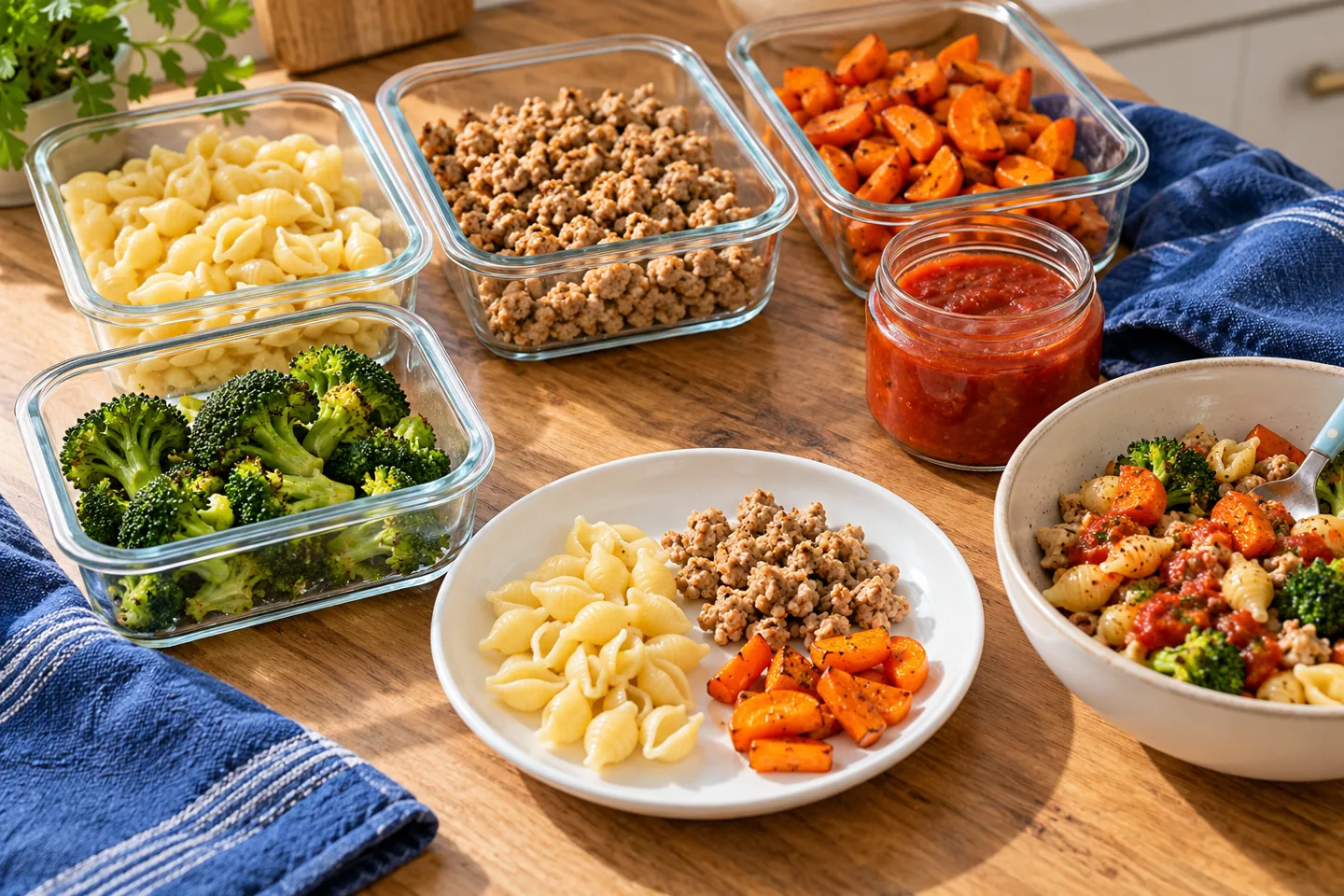
Meal prep for picky eaters can leave you with a full fridge and no easier dinner. On Tuesday, the pasta has absorbed the sauce, the toast is soft, and the child who ate turkey yesterday wants it nowhere near tonight’s bread. The cooking is done. The dinner problem isn’t.
Meal prep for picky eaters works best when you decide what to prepare ahead—and what to leave until serving. Cook a few useful components, store them separately, and keep the details that matter to your family: the familiar pasta shape, dry toast, or sauce in its own bowl. Start with two or three dinners before committing to a whole week.
Below is a complete three-dinner example with shopping quantities, a prep sequence, storage decisions and a free printable and fillable PDF worksheet. It is designed for parents feeding children, though the same organization can help adults who prefer separate components. It is a cooking and planning guide, not a feeding treatment or a complete nutrition plan.
Start with the food your family actually eats
Write down three currently familiar foods, including how they are served. “Pasta” leaves too much room for surprise. “Small shells, warm, no sauce” tells you what to buy and what to reserve.
| Instead of writing… | Write the detail that changes your prep |
|---|---|
| Chicken | Soft shredded chicken, not browned cubes |
| Bread | Dry toast; toppings served beside it |
| Vegetables | Soft carrot pieces; no herbs mixed through |
| Cheese | Grated cheese in a separate bowl, not melted |
These are examples, not a checklist your child must pass. Use their actual preferences. Ask a small practical question such as “Do you want the sauce beside the pasta?” rather than asking them to design the entire menu.
The American Academy of Pediatrics’ picky-eating guidance recommends offering a liked food with meals and avoiding pressure or bribes. Preparing a familiar component helps you make that option available; it cannot guarantee what or how much a child will eat.
Choose the amount of meal prep that helps
Not every food needs to be cooked in advance. A child who likes freshly cooked noodles but dislikes reheated noodles may do better with ingredients prepared ahead and the pasta cooked at dinner.
| What you can manage | Prepare ahead | Leave until dinner |
|---|---|---|
| 10 minutes: reduce decisions | Choose two meals, check ingredients, portion dry pasta, set aside unopened beans and label containers | All cooking |
| 20–30 minutes: remove one difficult task | Cook one protein or prepare one vegetable; cool and store it safely | Pasta, toast and final assembly |
| About 45–60 minutes: prepare several components | Cook turkey and carrots, optionally cook pasta, portion ingredients by meal | Toast, canned beans and any texture-sensitive items |
Those times are planning estimates, not tested promises. Your equipment, quantities and interruptions will change them. If you have only one burner or are watching a young child, work through the jobs in sequence rather than running several pans.
A shopping list for three flexible family dinners
The example below starts with two adults and two children. Quantities are household starting amounts, not prescribed child portions. Adjust for appetites, allergies and the number of people eating. It covers dinners only; add the rest of your household’s food separately.
The dinners are turkey pasta plates, turkey-and-cheese toast plates, and warm white-bean mash with toast. They deliberately share ingredients without repeating an entire seven-day menu.
| Ingredient | Amount to buy or check | How it is used |
|---|---|---|
| Ground turkey | 2 lb / about 900 g raw | Cook together; divide the cooked yield equally between dinners 1 and 2 |
| Small pasta shells or another familiar shape | 12 oz / about 340 g dry | Dinner 1 only; cook fresh if reheated pasta is a problem |
| Carrots | 1½ lb / about 680 g | Cook together; half for dinner 1, half for dinner 3 |
| Frozen broccoli | 1 lb / about 450 g | Dinner 2; cook on the day or during prep |
| Canned white beans | Two 15-oz cans | Dinner 3; keep unopened until then |
| Sliced bread | 12 slices, plus any household extra | 6 slices each for dinners 2 and 3 |
| Grated cheddar | 1 cup / about 110 g | Dinner 2; use your suitable alternative if needed |
| Tomato sauce | 1 cup / about 240 ml | Dinner 1; serve separately |
| Olive oil or another suitable cooking oil | About 3 tbsp available | Turkey, carrots and bean mash; adjust to your pans |
| Water and familiar seasonings | Check the cupboard | Keep strong flavors optional at the table |
Before paying: if beans are unsuitable, replace that dinner and its ingredients now. If you need dairy-free cheese or wheat-free bread and pasta, check the actual labels; “plant-based” does not mean free of every allergen. The quantities include no spare lunch portions. Add those deliberately if you want them.
For a full menu rather than a prep workflow, use our 7-day picky eater meal plan with grocery quantities. If you are still choosing the dinners, browse the family dinner ideas guide first.
Meal prep for picky eaters: your step-by-step prep session
1. Set out the containers before cooking
You need shallow containers for two portions of cooked turkey and two portions of carrots, plus pasta if preparing it ahead. One “portion” here means the amount for a whole family dinner. Use additional containers if needed to avoid deep piles of food.
Label them with the food, cooking date and intended dinner. For example: “Turkey — cooked Sunday — Monday pasta.” A second label might read “Turkey — cooked Sunday — Tuesday toast.” Decide immediately which portions belong in the freezer if plans move later.
2. Cook the carrots while you prepare the turkey
Wash and peel the carrots if preferred. Cut into similar-sized pieces, toss with about 1 tbsp oil and spread on a baking tray. Roast at 400°F/200°C, checking from around 20 minutes, until tender enough for the people eating them. Smaller or thinner pieces may cook sooner. Steam instead if soft carrots without browned edges are more familiar.
Meanwhile, heat about 1 tbsp oil in a large skillet if your pan needs it. Cook the turkey in manageable batches, breaking it into crumbles. Season in a way your family already uses. Check several places with a food thermometer: ground turkey must reach 165°F/74°C, according to the FoodSafety.gov cooking temperature chart. Browning alone is not the check.
Divide the cooked turkey equally between dinners 1 and 2. Divide the cooked carrots equally between dinners 1 and 3. Cooking reduces weight, so do not expect each turkey container to weigh a pound afterward.
3. Make an intentional decision about the pasta
If your household is happy with reheated pasta, cook it according to the package, drain, and transfer to shallow containers. Keep sauce separate. If freshly cooked pasta is important, measure the dry amount now and leave it uncooked. You have still removed the shopping, measuring and topping preparation from dinner.
Keep the beans unopened for dinner 3. Leave bread untoasted and store it according to its package; freeze slices if needed. Cook frozen broccoli according to the packet on dinner 2, or prepare it now if its reheated texture suits your family.
4. Put food away as each component finishes
Do not leave the first pan cooling on the counter while you finish everything else. Follow the storage rules below, using shallow containers and prompt refrigeration. Wipe down surfaces and wash utensils that contacted raw turkey before handling ready-to-eat food.
Turn the prepared ingredients into three dinners
Dinner 1: Turkey pasta plates
Use all the pasta, half the cooked turkey, half the carrots and up to 1 cup tomato sauce. Reheat prepared leftovers to 165°F/74°C; cook the pasta fresh if that was your choice. Heat the sauce separately.
At the table, one person can mix turkey and sauce through their pasta while another has plain shells with turkey and carrots beside them. Put a modest first serving on the child’s plate and make more available. Leaving sauce separate is a serving choice, not a promise that the other components will be eaten.
Dinner 2: Turkey-and-cheese toast, assembled or separate
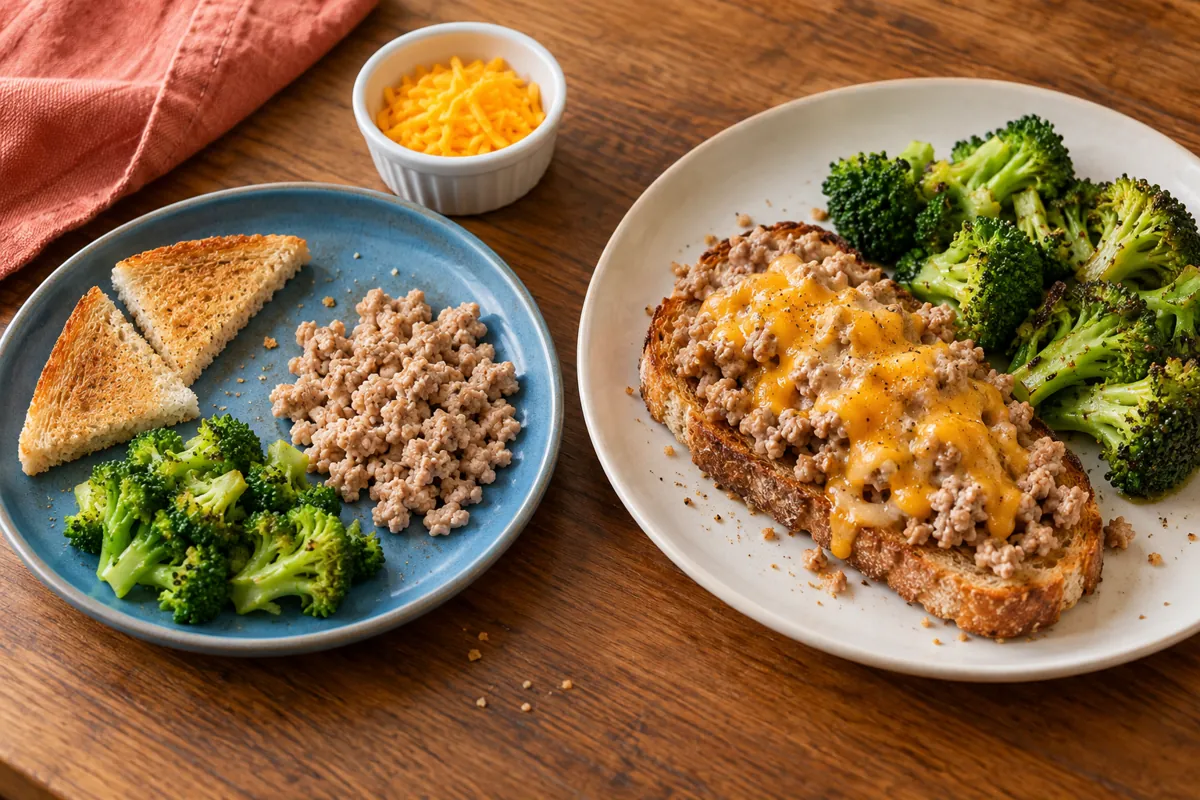
Reheat the second half of the turkey to 165°F/74°C and prepare the broccoli. Toast six bread slices when you are ready to eat. Divide the 1 cup grated cheese among those who want it.
For an assembled version, add hot turkey and cheese to toast and briefly melt the cheese under a grill or broiler, watching closely. For a separate plate, leave the toast dry and place turkey, cheese and broccoli alongside. Reheat the turkey fully before assembly rather than relying on a quick cheese-melting step to warm it safely.
Dinner 3: Warm white-bean mash with toast and carrots
Drain and rinse the two cans of white beans. Warm them in a saucepan with about 1 tbsp oil and a little water, stirring and adding water a spoonful at a time until they are easy to mash. Season gently. Reheat the reserved carrots to 165°F/74°C and toast the remaining six bread slices.
Serve the mash as a spread or in a separate small bowl. Do not spread it on every slice before asking. If beans are unfamiliar but toast is accepted, keep some toast plain. If neither food works for your household, this dinner should already have been replaced during the shopping step.
For more ways to share a preparation without identical plates, see one family dinner with flexible servings.
Storage: plan the dates, not just the meals
For a Sunday prep, use these dinners on Monday, Tuesday and Wednesday. If one moves to Friday, freeze its suitable cooked components promptly on prep day. Do not stretch refrigerated storage just because the meal remains on your calendar.
- Chill promptly: refrigerate perishables within two hours of cooking, or one hour when the temperature is above 90°F/32°C. Divide food into shallow containers; do not wait for a large pot to cool completely on the counter.
- Check the appliance: keep the refrigerator at 40°F/4°C or below and the freezer at 0°F/−18°C or below.
- Separate raw and cooked food: keep raw turkey away from cooked ingredients, bread and clean utensils. Wash hands and preparation surfaces.
- Reheat thoroughly: bring leftovers to 165°F/74°C. In a microwave, cover, stir or rotate, allow standing time and check several places. Then let a child’s portion cool to a suitable eating temperature.
These handling steps follow the FDA’s safe food handling guidance and the cooking chart linked above. The FoodSafety.gov storage chart lists cooked meat or poultry at three to four days refrigerated; raw ground turkey has a shorter one-to-two-day window. Check package guidance and the appropriate storage advice for every ingredient.
Thaw frozen portions in the refrigerator, not on the counter. Reheat only the amount you need, keeping the rest refrigerated. If storage time or temperature is uncertain, discard the food rather than trying to rescue it by reheating.
When meal prep creates a new problem
| What happens | What to change next time |
|---|---|
| Reheated pasta feels sticky or different | Keep dry pasta measured and cook it at dinner. Prep the other components. |
| Toast goes soft in a packed container | Store bread separately and toast just before serving. |
| The turkey is too dry after reheating | Reheat covered with a small splash of water; keep sauce optional. |
| A familiar food is rejected after adding herbs | Reserve some before seasoning and say what is in the food. Do not disguise additions. |
| Two children prefer different presentations | Use one shared preparation with separate toppings; decide the available options before cooking. |
| Too much food is left over | Reduce the next batch or freeze an untouched portion promptly. Start with smaller plated servings. |
| You abandon the whole session halfway through | Finish and safely store one component. A cooked protein or prepared vegetable is still useful. |
If your child eats only a few foods, a new meal-prep system may not be the first thing they need. Discuss concerns about their intake, growth or feeding with their pediatrician. Follow any individual feeding plan rather than replacing it with a generic menu.
Download your free meal-prep worksheet
Turn the ideas above into your own plan. This free two-page PDF has 35 fillable fields for three dinners, familiar foods and textures, a shopping list, prep order, storage dates and a backup dinner.
Your next three dinners, on two practical pages
Download it without signing up. Type into the fields and save your copy, or print the blank pages and fill them in by hand.
Download the free fillable worksheet (PDF)
2 pages · US Letter · approximately 60 KB. If your browser does not show the form fields, download the file and open it in a PDF reader that supports fillable forms. Save your completed copy before closing. This worksheet records your choices; it does not generate menus or calculate storage dates.
Make the last line specific: “fresh toast worked better” is more useful than “bad dinner.” The aim is to learn which jobs can move earlier in the day, without turning meals into a record of bites eaten.
Choose the planning format you will actually use
The free three-dinner method is a complete starting point. If you want more structure, these are our two optional paid resources:
- Peaceful Mealtimes Start Here — printable and fillable guide: a 14-day guide with menus, grocery lists and reusable worksheets. Choose this if you want pages to print or fill in digitally.
- Interactive 14-Day Picky Eater Plan: guided days in a personal space with saved progress. Choose this if you prefer returning to an online routine.
Already have a system that works? Keep using it; the component-prep approach above does not require either product.
Questions parents ask about picky eater meal prep
Can I prepare all five weekdays on Sunday?
You can organize the whole week on Sunday, but cooking everything and leaving it in the fridge until Friday is a different decision. Assign early-week portions to the fridge, freeze suitable later portions promptly, or plan a short midweek cooking session. Check storage guidance for each food.
What if my child will only eat freshly cooked food?
Prepare ingredients and decisions instead of finished meals. Measure pasta, check supplies, wash suitable produce, portion seasonings and write the cooking order. Cook the texture-sensitive item at dinner. Meal prep can mean having less to think about, not having every pan finished.
Can I use this for school lunchboxes?
Some components may work, but this example is designed for dinners at home. School lunches need their own temperature control, packaging and allergy-rule checks. Use our cold lunch ideas for kids or picky eater school lunch guide for that job.
Do I need special meal-prep containers?
No matching set is required. Use clean, food-safe shallow containers that fit your fridge, with suitable lids. Check whether each container is approved for freezing or reheating before using it that way. Separate containers are helpful when you want to reheat one component without warming everything.
For your next prep session: choose two dinners, write down what stays separate, and prepare one component you will use soon. Build the routine around what genuinely saves effort in your kitchen.
Editorial note: This is an original MammaRecipes planning example, not a kitchen-tested recipe collection or a medically reviewed feeding program. Preparation times are estimates. The images are AI-generated serving illustrations. Adapt ingredients, food sizes and textures to the person eating; consult the linked primary sources for safety guidance.