Finding practical lunch ideas for kindergarteners sounds simple until you’re actually doing it at 7:15 a.m. with one shoe still missing. You want something your child will eat, that stays fresh until noon, that fits the school’s allergy rules, and that doesn’t take 20 minutes to assemble.
Here’s the good news: the most useful kindergarten lunches are not the most creative ones. They are simple, familiar, easy to open, and built from a few foods your child already accepts. Five-year-olds don’t need bento art. They need a lunch they can manage on their own, in a noisy cafeteria, within the lunch period their school provides.
In this guide you’ll find a simple lunchbox formula, 15 easy lunch ideas with make-ahead tips, food safety basics, a 30-minute weekly prep routine, and practical advice for picky eaters and lunchboxes that keep coming home full.
The simple kindergarten lunch formula
Instead of planning every lunch from scratch, use this five-part structure. It works for almost every child and every budget.
- One main item: a sandwich, wrap, quesadilla, pasta or something warm in a thermos.
- One fruit: fresh, cut small, or a fruit cup packed in juice rather than syrup.
- One vegetable: raw crunchy sticks, cooked peas or corn, cucumber coins, whatever your child tolerates. Even a couple of pieces counts.
- One filling side: cheese, yogurt, hummus, crackers, a mini muffin. This is what keeps hunger away through the afternoon.
- One “safe” food: something your child always eats, no matter what. Pretzels, plain crackers, a favorite fruit. This is your insurance policy.
| Part | Examples |
|---|---|
| Main | Turkey roll-up, pasta salad, egg muffin |
| Fruit | Sliced strawberries, soft pear, quartered grapes |
| Vegetable | Cucumber strips, soft cooked carrots, peas |
| Filling side | Yogurt, hummus, grated cheese |
| Familiar food | A fruit or bread your child accepts |
Keep portions small. Appetites differ from child to child and day to day. Start with portions based on what your child usually eats, ask whether lunch was enough, and add more when needed. Small servings with enough familiar food can feel more manageable than a crowded box.
What makes a lunch “kindergarten-proof”
Before the ideas, a few practical filters. A great recipe that fails these tests will still come home untouched.
Can they open it themselves? Teachers often have 20-plus children and one pair of hands. Test every container, bag and thermos lid at home. If you struggle, your child will too. Practice opening the lunchbox together the week before school starts.
Is it bite-sized? Cut food into pieces small enough to eat without a knife. Sandwiches in small squares or strips are easier to handle than triangles the size of their face.
Is it safe for small mouths? For children this age, quarter grapes and cherry tomatoes lengthwise, slice hot dogs into strips (never coins), and adapt hard, round or sticky foods to your child’s chewing skills. Pay attention to school policies too.
Does it follow school rules? Many schools are nut-free, and some restrict certain allergens. Seed butter, soy butter or hummus may be options, but soy and sesame are allergens too; check individual restrictions. Check your school’s list at the start of the year.
Will it survive until lunchtime? Food sits in a backpack for four or five hours. Soggy bread, wilted lettuce and warm dairy are the usual culprits. More on that below.
Does it look familiar? New foods are more likely to be tried at home first. School is not the place to debut something unfamiliar, since the child is tired, distracted and rushed.
15 easy lunch ideas for kindergarteners
1. Turkey and cheese roll-ups
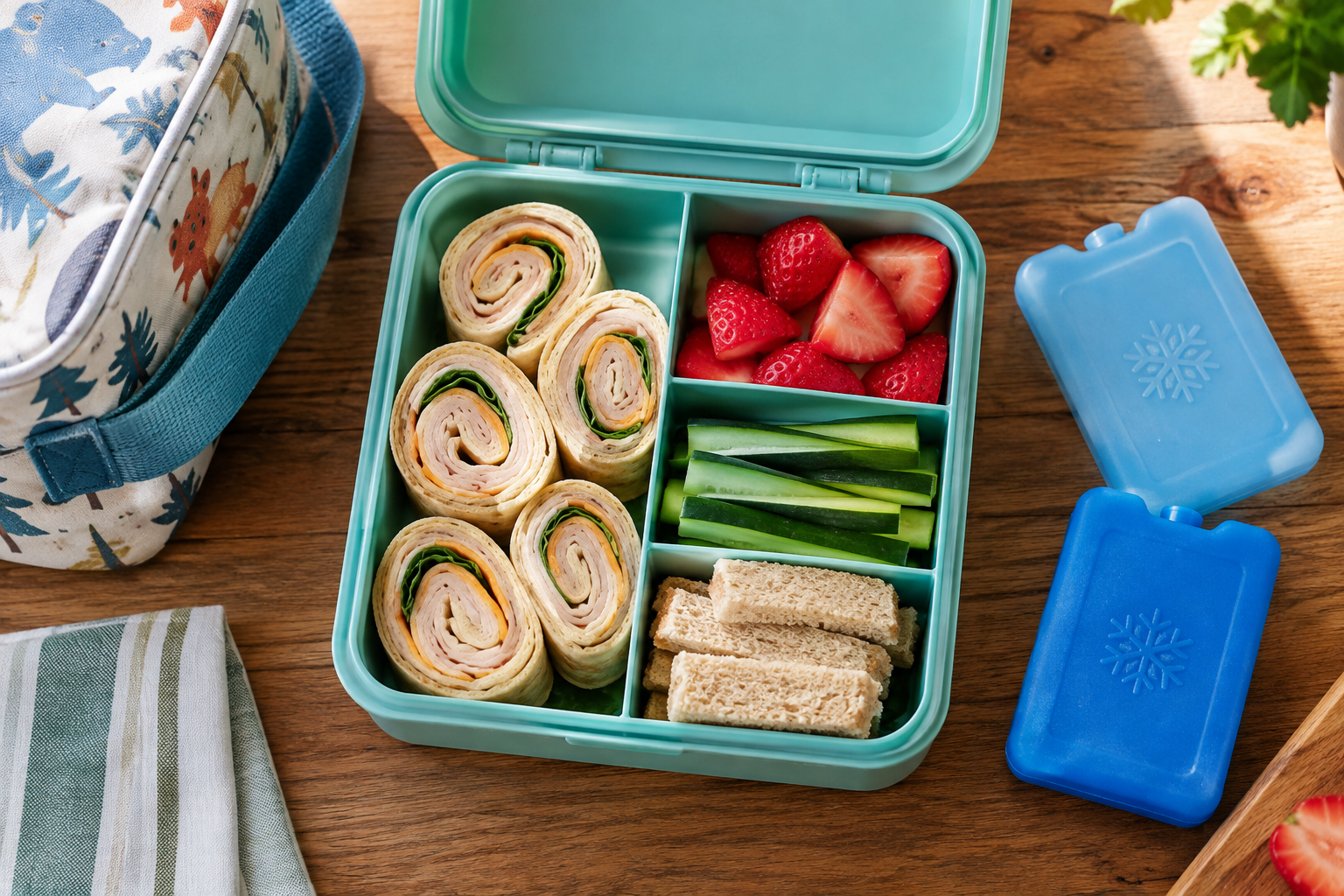
Roll sliced turkey and mild cheese inside a soft tortilla, then cut into small pinwheels. Pack with cucumber coins and strawberries.
Why it works: no crusts, no mess, easy to pick up, and the pinwheel shape feels fun without extra effort.
Make-ahead tip: roll them the night before and wrap tightly in parchment so they don’t dry out. A thin layer of cream cheese acts as “glue.”
2. Sunflower butter and banana sandwich
Spread sunflower seed butter on soft bread, add thin banana slices, and cut into small squares. Pack with apple slices.
Why it works: a familiar spread-and-fruit combination; choose a seed butter permitted by your school and check its allergen label.
Make-ahead tip: bananas brown fast. Toss the slices in a drop of lemon juice, or swap banana for a thin swipe of jam if mornings are chaotic.
3. Mini pasta salad
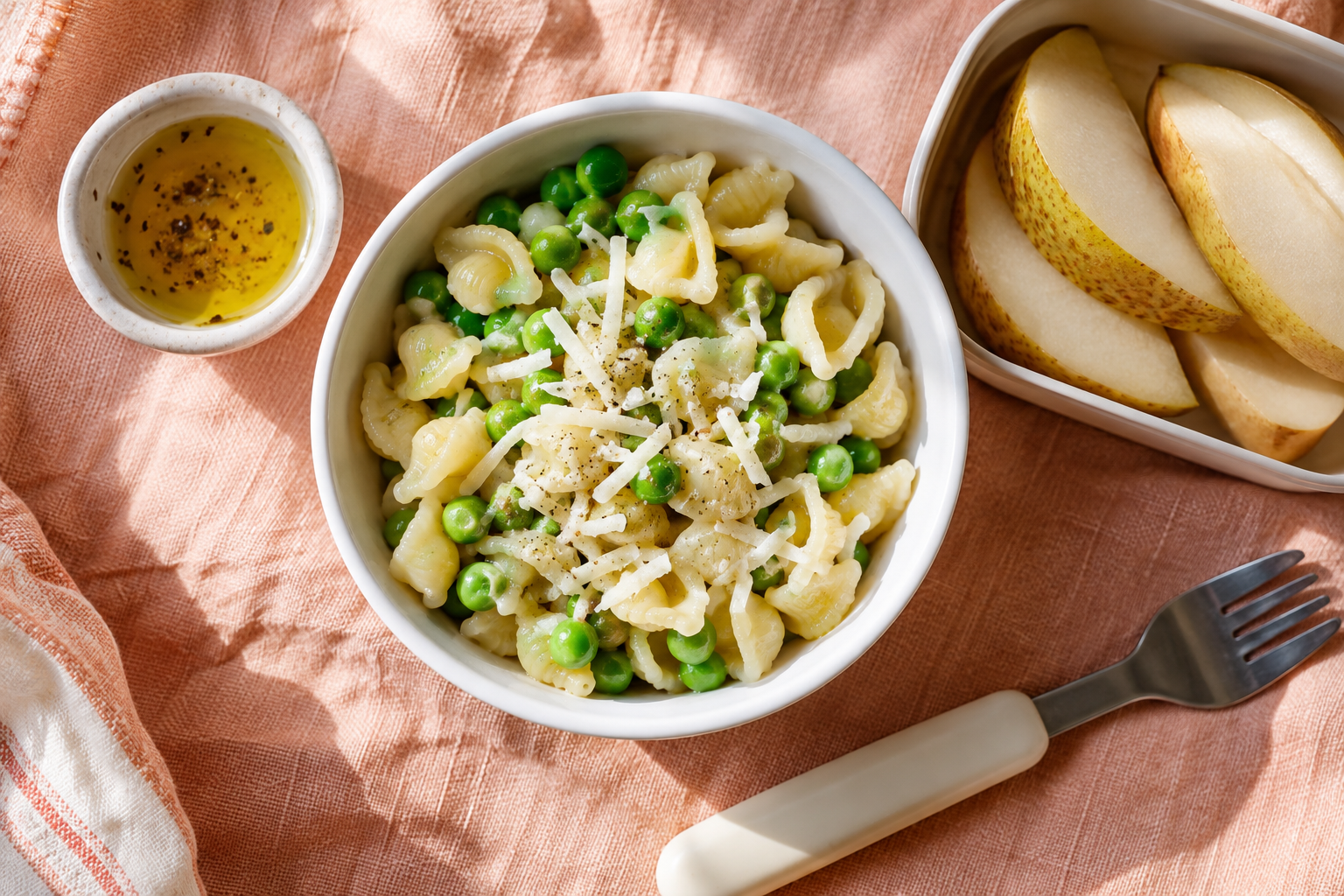
Mix cooled small pasta (rotini, mini shells or bow-ties) with peas, grated mozzarella and a little olive oil. Pack soft pear slices or grapes quartered lengthwise on the side.
Why it works: pasta is one of the most widely accepted foods among young children, and the small shapes are easy to eat with a fork or fingers.
Make-ahead tip: cook a double batch at dinner and set half aside before adding sauce. Rinse under cold water so it doesn’t clump.
4. Cheese quesadilla wedges
Make a plain cheese quesadilla, slice into triangles and pack with corn and orange segments.
Why it works: it tastes good cold or at room temperature, and the mild flavor suits selective eaters.
Make-ahead tip: cook a small batch and refrigerate promptly; freeze portions intended for later in the week. Add a spoonful of refried beans for extra protein.
5. Hummus snack box
Add hummus, pita triangles, carrot sticks, cheese cubes and berries. Keep each item separate for selective eaters.
Why it works: kids love dipping, and a “snack plate” lunch gives them control over what they eat first.
Make-ahead tip: use a small lidded container or silicone cup for the hummus so it doesn’t soak into the pita. Steam the carrot sticks until completely soft if raw ones are too hard to chew.
6. Egg muffins
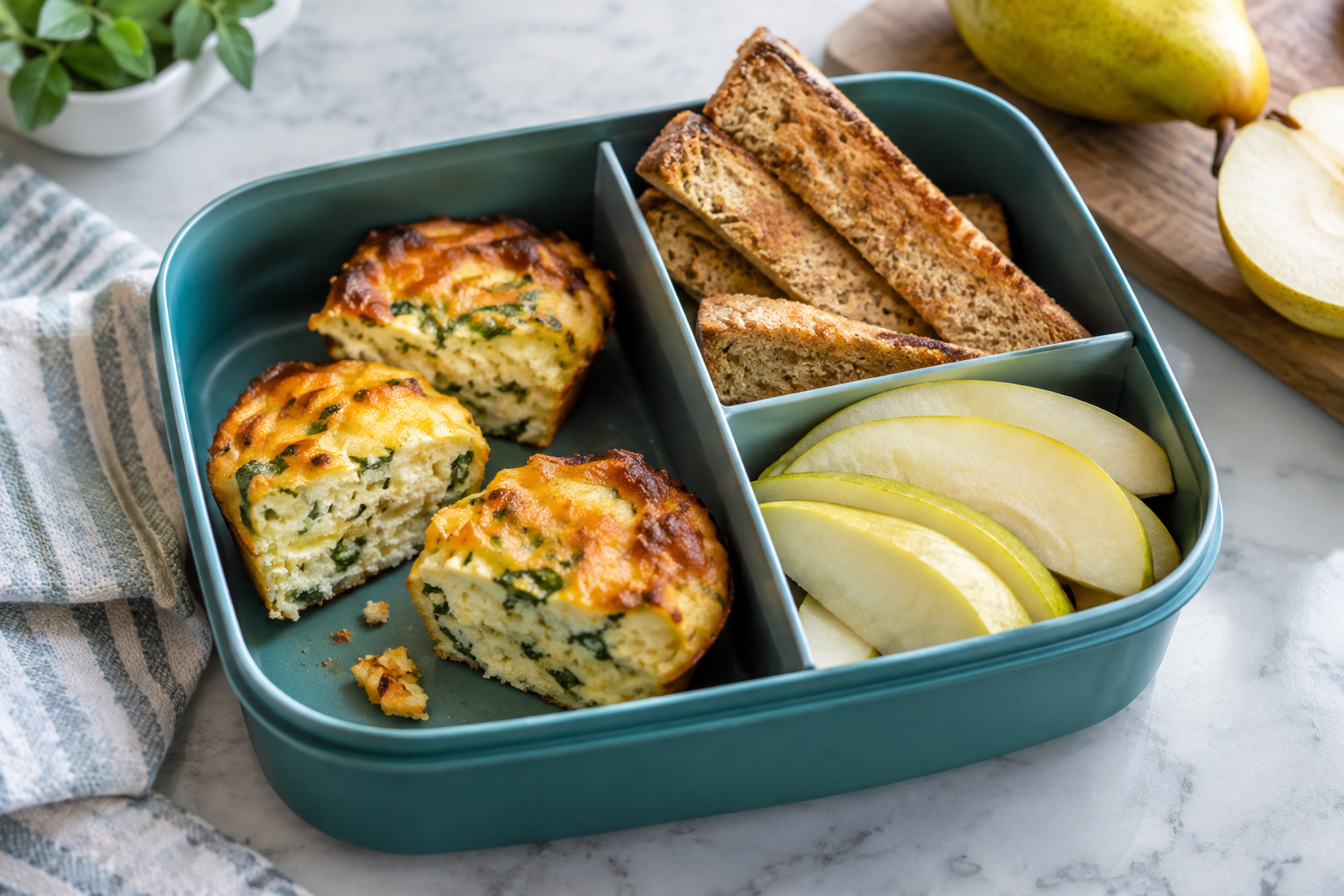
Bake beaten eggs with cheese in a muffin tin. Pack two with toast fingers and sliced pear.
Why it works: protein-rich, naturally portioned and freezer-friendly.
Make-ahead tip: bake a batch of 12, freeze individually, and move one or two to the fridge the night before. Thaw fully in the refrigerator before packing, then keep them cold with two cold sources. Finely chopped spinach or diced peppers can be added once your child is comfortable with the plain version.
7. Chicken and rice bites
Use leftover chicken and rice in a small thermos or lunch container. Add peas separately if your child prefers.
Why it works: it turns last night’s dinner into today’s lunch with zero extra cooking.
Make-ahead tip: shred the chicken finely and mix with a little broth so the rice stays soft. For a finger-food version, press the mixture into small balls.
8. Bagel pizza bites
Top bagel halves with tomato sauce and mozzarella, then bake until melted. Cool completely before packing.
Why it works: “pizza” is a lunch most kids trust, and this version travels well.
Make-ahead tip: assemble a tray of them, freeze uncooked, then bake straight from frozen (add a few minutes). Cool fully before closing the lunchbox, otherwise steam makes them soggy.
9. Yogurt and granola box
Pack plain or vanilla yogurt, a small container of granola, blueberries and a mini muffin.
Why it works: kids feel proud building their own bowl, and it’s a light lunch for children who prefer softer textures.
Make-ahead tip: keep the granola separate so it stays crunchy. Choose lower-sugar yogurt and sweeten it yourself with fruit when you can. Use two proper cold sources to keep the whole lunch cold; do not rely on a yogurt tube alone.
10. Bean and cheese tacos
Fill soft tortillas with black beans and cheese, fold, then cut in half. Add avocado slices with a little lemon juice.
Why it works: beans give fiber and plant protein, and the soft tortilla is easy to bite.
Make-ahead tip: mash the beans lightly so they stay inside the tortilla. If your child dislikes texture, use refried beans instead.
11. Mac and cheese thermos
A warm thermos of simple mac and cheese is comforting on busy school days. Add a fruit cup on the side.
Why it works: warm food feels like a treat, especially in cold months.
Make-ahead tip: preheat the thermos with boiling water for five minutes, empty it, then add the piping-hot pasta and close the lid right away. Make the sauce slightly looser than usual, as it thickens while sitting.
12. Ham and cucumber sandwiches
Use soft bread, ham and cucumber ribbons. Cut into fun small shapes only if it saves time, not if it creates stress.
Why it works: familiar, light and easy to eat quickly.
Make-ahead tip: pat the cucumber dry with a paper towel and place cheese or a thin layer of butter against the bread to block moisture.
13. Cottage cheese dipper box
Add cottage cheese, crackers, peaches and pretzel sticks. Offer foods separately so your child can choose the order.
Why it works: high in protein, and the crackers become dippers, which makes lunch interactive.
Make-ahead tip: small-curd cottage cheese is usually better accepted. If texture is an issue, try mixing it with a spoonful of yogurt, or serve ricotta instead.
14. Leftover pancake lunch
Pack mini pancakes with yogurt for dipping, banana slices and cheese cubes.
Why it works: “breakfast for lunch” is a fun surprise, and pancakes freeze beautifully.
Make-ahead tip: make a big batch on the weekend, freeze between sheets of parchment and warm in the toaster before packing. Cool fully so they don’t turn gummy.
15. Pita pocket with chicken
Fill a soft pita with shredded chicken and cheese. Add cherry tomatoes only if your child already enjoys them.
Why it works: the pocket keeps everything contained, so it’s a low-mess sandwich alternative.
Make-ahead tip: cut the pita in half before filling, and quarter the tomatoes lengthwise. If the pita tears, warm it for 10 seconds in the microwave to soften it.
Keeping lunch safe until noon
Perishable foods should not sit in the “danger zone” between 40°F and 140°F (4°C and 60°C) for more than two hours (one hour above 90°F/32°C), according to USDA guidance. A backpack in a warm classroom can easily cross that line, so a few habits matter.
- Cold food: use an insulated lunch bag with at least two cold sources, such as two frozen gel packs or a gel pack and a frozen water bottle. Chill the food before packing it, since warm food in a closed box heats everything around it.
- Warm food: preheat the thermos with boiling water, fill it with hot food and keep the lid closed until lunchtime. Hot food should remain at 140°F/60°C or above; use a container that can maintain this temperature.
- Foods to be careful with: deli meat, dairy, cooked rice, cooked eggs and cut fruit are the most sensitive. Keep them cold.
- Cleaning: wash lunchboxes and containers daily, and let them dry completely to prevent odors and bacteria.
A 30-minute component-prep routine
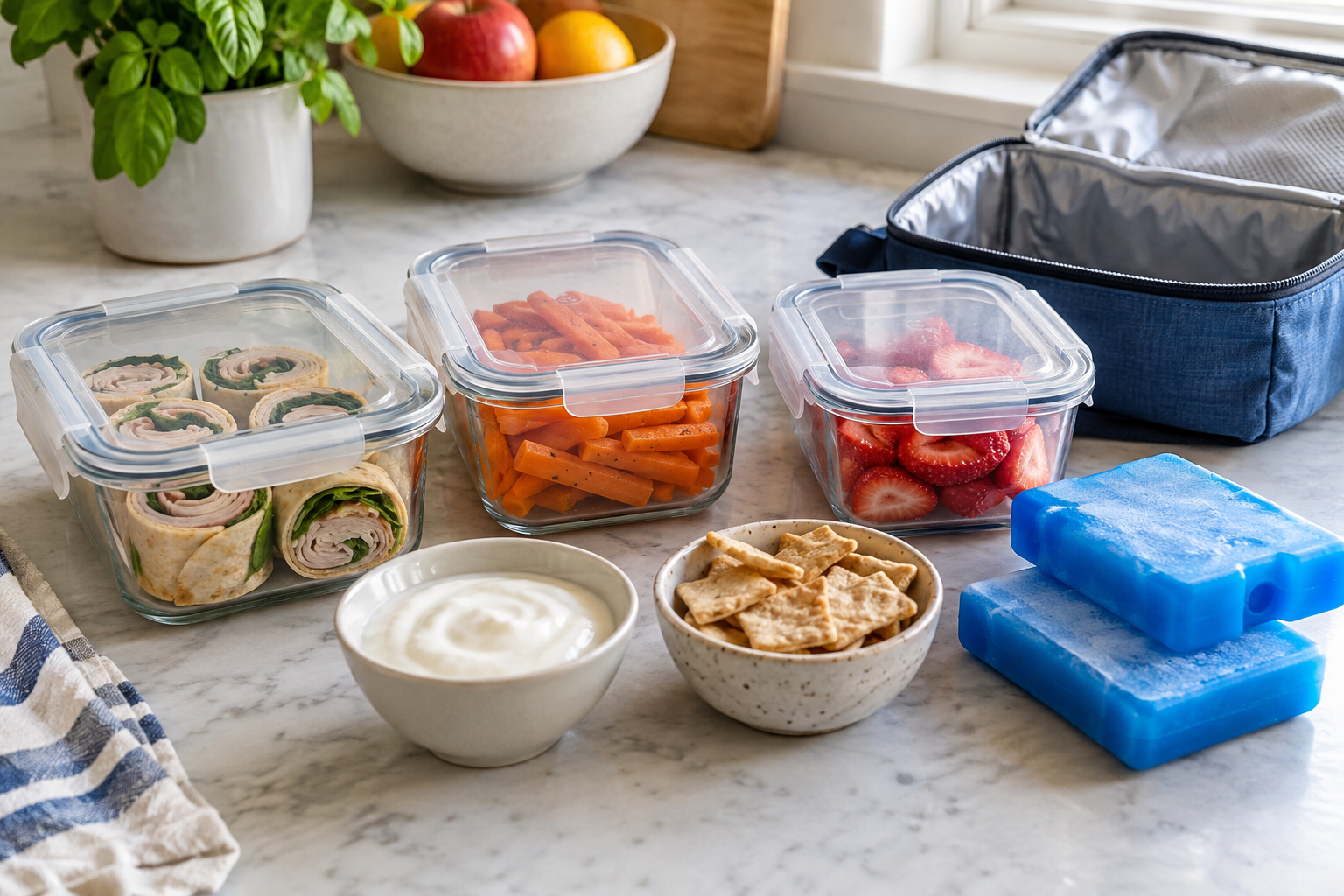
This is a target for simple component prep, not a promise that every recipe will cook in 30 minutes. You don’t need to prep every lunch in advance. Prepping a few components is enough to make weekday mornings dramatically easier.
- Bake or cook one make-ahead main: egg muffins, quesadillas, mini pancakes or bagel pizzas.
- Cook a starch: a pot of pasta or rice.
- Wash and cut sturdy produce: carrots, cucumbers, grapes (quartered), berries.
- Portion snacks: crackers, pretzels, cheese cubes and granola into small containers.
- Set up a “lunch station”: one drawer or basket in the fridge with grab-and-go items.
Refrigerate prepared foods promptly. Do not keep a whole school week of cooked lunches in the fridge: freeze later-week portions or do a small midweek refresh. Follow product labels and the FoodSafety.gov storage chart.
A sample week:
| Day | Main | Fruit | Vegetable | Side |
|---|---|---|---|---|
| Monday | Turkey roll-ups | Strawberries | Cucumber coins | Pretzels |
| Tuesday | Cheese quesadilla | Orange segments | Corn | Cheese cubes |
| Wednesday | Egg muffins + toast | Pear slices | Carrot sticks | Yogurt |
| Thursday | Mini pasta salad | Grapes (quartered) | Peas | Mozzarella cubes |
| Friday | Mini pancakes | Banana | Cucumber | Yogurt for dipping |
Repeating lunches is completely fine. Children often prefer predictability, and a small rotation of accepted meals is far more sustainable than reinventing lunch every week.
Tips for picky kindergarten eaters
Food preferences can be strong at this age, and some children need extra support. The goal isn’t to force variety, it’s to keep exposure calm and consistent.
- Start with one less familiar food beside two safe foods. Offer a single new item in a tiny portion, next to things you know they’ll eat.
- Don’t pressure. Keep both home meals and lunchboxes pressure-free. Offer food without bargaining or asking your child to earn dessert.
- Keep foods separate. Many selective eaters dislike foods touching. Silicone cups or a bento-style box solve this without extra effort.
- Let them choose. Offer two options for fruit and two for the side, and let your child pick. Even small choices increase buy-in.
- Serve familiar foods in new forms. A child who loves cheese may accept it as a roll-up, cubes or a quesadilla wedge.
- Involve them. Kids are more likely to eat something they helped pick, wash or pack.
- Repeat exposure patiently. It can take many tries before a child accepts a new food. A rejected item today isn’t a failure.
If your child eats a very limited range of foods, loses weight, or has significant difficulty with textures, talk to your pediatrician. It’s always worth ruling out something more than typical pickiness.
What if the lunchbox comes home full?
It happens to everyone. Before you worry, check a few things:
- Time: ask how much seated eating time your child actually gets, and part of that is spent lining up, unpacking and socializing. Lunch might simply be too much to eat that fast.
- Difficulty: they may not be able to open a container or peel a clementine.
- Portion size: a lunch that looks big can feel intimidating.
- Recess order: if recess comes before lunch, kids tend to eat more. If it comes after, they may rush.
- Ask gently: “What was the yummiest thing in your lunch?” works better than “Why didn’t you eat?”
Do not serve returned perishable leftovers when their temperature history is uncertain. Offer a fresh after-school snack and look for patterns across several days rather than judging one lunch.
Frequently asked questions
How much food should I pack for a kindergartener?
Start small: roughly half a sandwich or one small main, a handful of fruit, a few vegetable pieces and one filling side. Adjust this starting amount to your child’s appetite and the length of the school day; offer more if they regularly finish and remain hungry.
What are good nut-free lunch ideas for kindergarten?
Sunflower seed butter sandwiches, cheese quesadillas, turkey roll-ups, hummus boxes, egg muffins, pasta salad and yogurt boxes are possible options when every ingredient and cross-contact label meets your child’s needs and school rules. Always check labels on packaged snacks.
Can I pack a lunch the night before?
Yes, for most items. Pack dry foods, sandwiches and fruit the night before and store the lunchbox in the fridge. Add crunchy items (granola, crackers) and ice packs in the morning.
How do I keep lunch cold without a fridge?
Use an insulated bag with two cold sources, such as two gel packs or a gel pack and a frozen water bottle, and chill food before packing.
What should I do if my child only eats the same three foods?
Keep familiar foods available and offer tiny, optional additions at home. If the accepted range really is only a few foods, is shrinking, or eating is distressing, discuss it with your pediatrician rather than assuming it will resolve on its own.
Are pre-packaged lunch kits a good option?
They can be a practical backup. Check the portion, ingredients, allergens and cooling instructions. A homemade snack box is another option, not a test of parenting.
Final thought
The best kindergarten lunch is not the most elaborate one. It is the lunch your child can open, recognize and enjoy. Start with the formula, choose three or four ideas from this list that fit your family, and rotate them. Then, when things feel steady, gently add variety, one small new food at a time.
You don’t need a perfect lunchbox. You need a repeatable one.
More help for busy evenings
Use dinner leftovers intentionally: our 7 easy meals under 30 minutes offer family dinner ideas to build on.
Food-safety guidance: USDA lunch-packing recommendations and FoodSafety.gov cold storage guidance. Adapt food preparation to your child’s skills. This guide is general information, not individual medical advice.