Toddler meals are easier when you stop starting from a blank page. Choose one familiar base, add a protein and a soft fruit or vegetable, and adapt the family meal before it reaches your child’s plate. You do not need a different elaborate recipe every day.
This guide gives you 25 breakfast, lunch and dinner ideas with actual preparation steps, texture options and useful ways to reuse ingredients. You will also find a simple weekly plan, a short shopping list and practical responses to common mealtime problems.
Who this guide is for: generally children around 12–36 months who are eating solids. Chewing skills vary. These are meal ideas and starting quantities, not prescribed portions or a medical feeding plan. Follow your child’s allergy plan and professional advice when relevant.
A simple formula for toddler meals
Think in components, not a perfect plate: a familiar starch such as rice or potato, a protein such as egg or mashed beans, a fruit or vegetable prepared to suit your child, and a little fat such as olive oil or avocado. A food may fill more than one role. There is no need to fit every food group into every mouthful.
Start with small amounts and offer more if wanted. Put at least one familiar food on the plate. The same chicken, rice and broccoli can be mixed in an adult bowl and served separately for a toddler; that is an adaptation, not cooking a second dinner.
Texture comes before presentation
Keep your child seated upright and supervise eating. Cook hard produce until soft, remove bones, shred tough meat, and mash firm round foods. Avoid whole nuts, popcorn, hard raw vegetable pieces and thick spoonfuls of nut or seed butter. Choose shapes and textures for the child’s development, not just their birthday. See the CDC choking-prevention guidance.
Check every ingredient for relevant allergens: these ideas include milk, egg, wheat, fish and sometimes sesame. “Nut-free” does not mean allergy-free. Use alternatives already tolerated, and seek individualized advice if you need to exclude several foods.
8 easy toddler meals for breakfast
These breakfasts reuse oats, eggs, yogurt and soft fruit. Choose one quick assembly option and one batch-cooked option for the week.
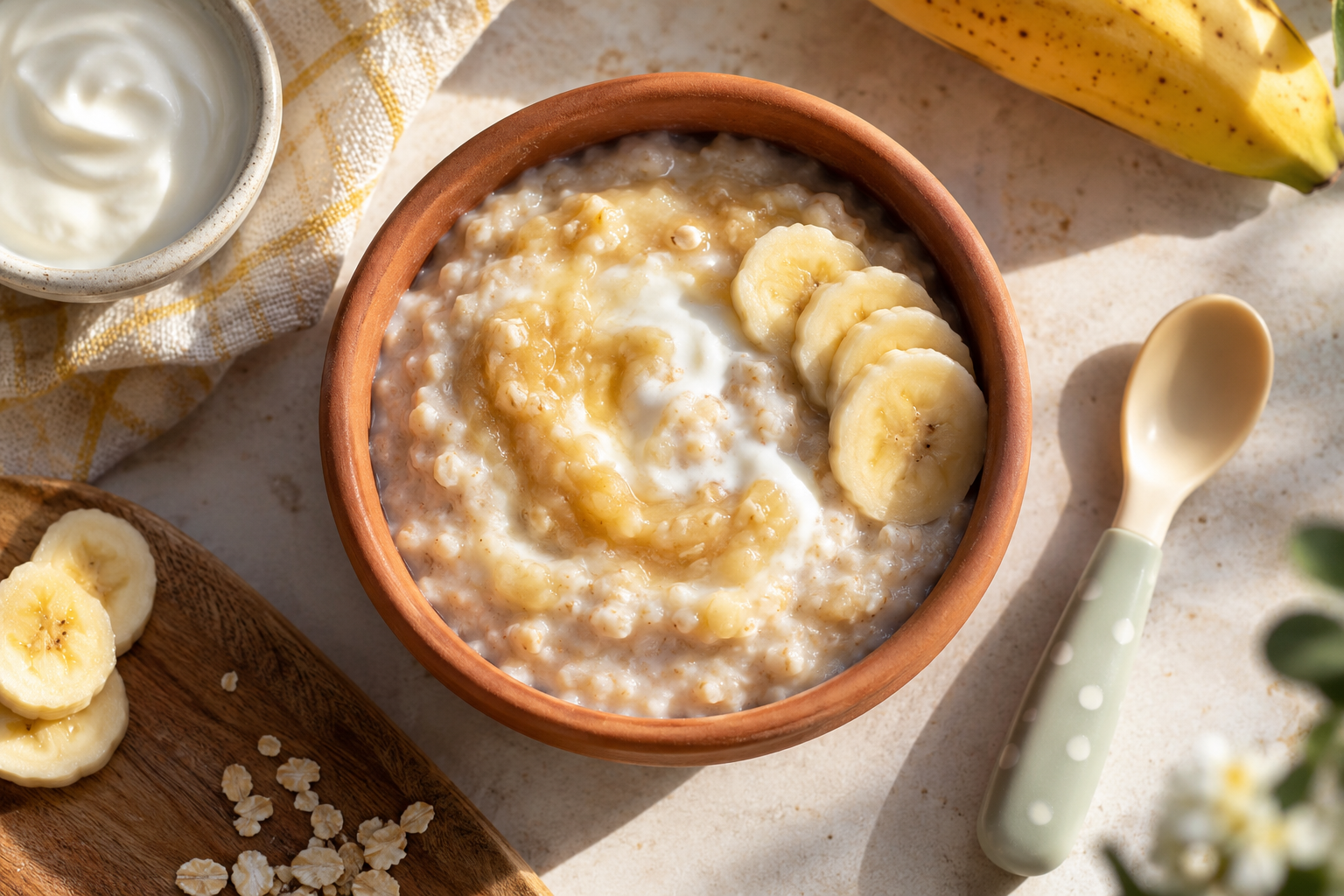
1. Banana oatmeal with yogurt
How to make it: Simmer 1/4 cup rolled oats with 1/2 cup water or milk until very soft, following the packet timing. Stir in half a mashed ripe banana. Let it cool, then add a spoonful of plain yogurt.
Adapt it: Keep it loose with a splash of liquid. For a dairy-free version, choose a suitable fortified alternative already tolerated by your child.
Make life easier: Cook extra plain oats for an adult breakfast and portion the toddler serving before adding toppings.
2. Soft scrambled eggs and toast
How to make it: Beat an egg with a teaspoon of water. Cook gently in a lightly oiled pan, stirring until fully set but still soft. Serve a small amount with lightly toasted bread cut to suit chewing ability and mashed berries.
Adapt it: Serve the egg and bread separately. A little grated cheese can be added if dairy is tolerated; it is optional.
Make life easier: Scramble eggs fresh while the bread toasts. This is a useful fallback when nothing has been prepped.
3. Mini banana pancakes
How to make it: Mash half a ripe banana, whisk in one egg and two tablespoons of flour. Cook small spoonfuls in a lightly oiled pan over medium-low heat, turning until both sides are golden and the centers are fully cooked.
Adapt it: Cut into soft manageable pieces and serve with yogurt instead of sticky syrup. Contains egg and wheat.
Make life easier: Freeze extras individually after cooling promptly; reheat thoroughly and cool to a safe eating temperature.
4. Yogurt with soft pear
How to make it: Spoon plain yogurt into a shallow bowl. Add ripe pear peeled and mashed or finely chopped to match your child’s skills. Stir in a spoonful of already-cooked oatmeal if a more substantial bowl is wanted.
Adapt it: Use soft cooked apple instead of pear. Do not add hard granola clusters or whole nuts.
Make life easier: Keep fruit in its own container so the texture of the yogurt stays familiar.
5. Avocado and cheese toast
How to make it: Spread mashed ripe avocado thinly on lightly toasted bread. Add a little finely grated cheese and cut the bread into manageable pieces. Pair with soft cooked fruit or a small serving of scrambled egg.
Adapt it: Offer avocado beside the toast if green foods on bread cause refusal. Thin spreading is easier than large slippery chunks.
Make life easier: Mash just what you need. Extra avocado can be used in the adult sandwich at the same meal.
6. Warm cinnamon oats
How to make it: Cook rolled oats according to the packet until soft. Stir in unsweetened applesauce and a tiny pinch of cinnamon. Add liquid to loosen, then cool and offer with a preloaded spoon if helpful.
Adapt it: For a child who rejects mixed textures, keep the applesauce in a separate little bowl.
Make life easier: This uses the same oats as idea 1, with a different fruit rather than a new shopping list.
7. Egg and cheese muffins
How to make it: Whisk four eggs with two tablespoons of milk and 1/4 cup finely grated cheese. Divide between six greased muffin cups. Bake at 350°F/175°C for about 15–20 minutes, until set; egg dishes should reach 160°F/71°C.
Adapt it: Cut one muffin into soft pieces. Finely chopped cooked spinach is optional, not something to hide without explanation.
Make life easier: Refrigerate promptly and use within 3–4 days, or freeze extras. Thaw in the refrigerator.
8. Cottage cheese and peaches
How to make it: Combine a small serving of cottage cheese with soft ripe peach, peeled and finely chopped or mashed. Add lightly toasted bread fingers on the side for a more complete meal.
Adapt it: Blend the cottage cheese smooth if the curds are difficult, or use plain yogurt instead. Choose pasteurized dairy.
Make life easier: Drain canned peaches packed in juice if fresh peaches are hard; cut them rather than serving large slippery pieces.
8 practical toddler meals for lunch
Lunch can be a small version of dinner, a soft snack plate or a one-pan meal. Refrigerated foods still need safe cooling if packed for daycare.
9. Soft cheese quesadilla
How to make it: Sprinkle finely grated cheese over half a small soft tortilla, fold and warm in a pan until melted. Keep the tortilla tender rather than crisp. Cut to suit your child and serve with very soft cooked carrots.
Adapt it: Serve cheese separately if the melted texture is unwelcome. Avoid long stretchy strands that are difficult to manage.
Make life easier: Use the remaining tortilla for an adult quesadilla so lunch needs only one pan.
10. Pea and parmesan pasta
How to make it: Cook a small pasta shape until tender. Add peas near the end of cooking, then drain. Mash the peas and toss with pasta, a little olive oil and finely grated parmesan.
Adapt it: Keep some plain pasta aside before mixing. Begin with a small amount of mashed peas beside it if needed.
Make life easier: Frozen peas and dried pasta make this a useful low-prep pantry meal.
11. Shredded turkey and soft bread
How to make it: Use tender cooked turkey, finely shredded and moistened with a little low-sodium broth. Serve with soft bread pieces and ripe avocado. Avoid tough folded slices or large meat pieces.
Adapt it: Swap turkey for cooked chicken or mashed white beans. Choose a protein your child already manages.
Make life easier: Set aside a portion of family roast poultry before adding strong sauces; date leftovers.
12. Hummus and soft pita plate
How to make it: Spread a thin layer of smooth hummus on soft pita strips. Add very soft cooked carrot pieces and a little mashed avocado. Hummus may contain sesame; read the ingredients if allergies are relevant.
Adapt it: Serve the hummus on the side for dipping. If pita is chewy, use a familiar soft bread instead.
Make life easier: A no-cook assembly meal when the carrots are already cooked and chilled.
13. Creamy macaroni with peas
How to make it: Cook small macaroni until tender. Stir in a spoonful of cream cheese and enough warm cooking water to form a light sauce, then add mashed cooked peas or offer them separately.
Adapt it: For milk allergy, use an appropriate dairy-free sauce rather than assuming any cheese substitute has the same nutrition.
Make life easier: Make the family pasta base once and season the adult portions separately.
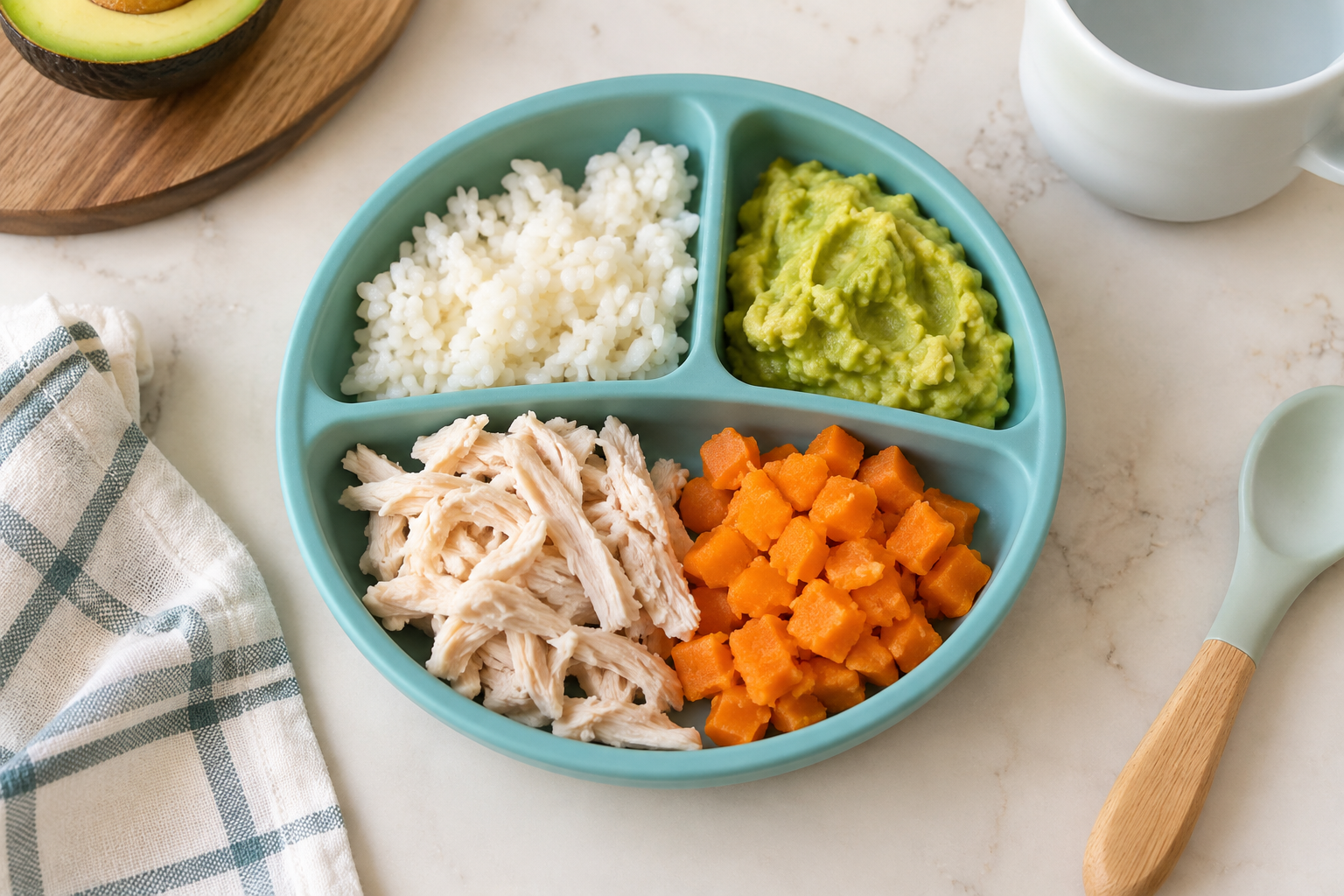
14. Chicken and rice plate
How to make it: Combine a small portion of soft cooked rice with finely shredded, tender cooked chicken. Add a little broth if dry. Serve mashed avocado and soft cooked carrots separately or mix them if preferred.
Adapt it: Rice should be loose and moist, not compressed into hard balls. Offer soft vegetables in a texture the child can manage.
Make life easier: Use safely stored leftovers, not rice that has been sitting on the counter. Reheat thoroughly once needed.
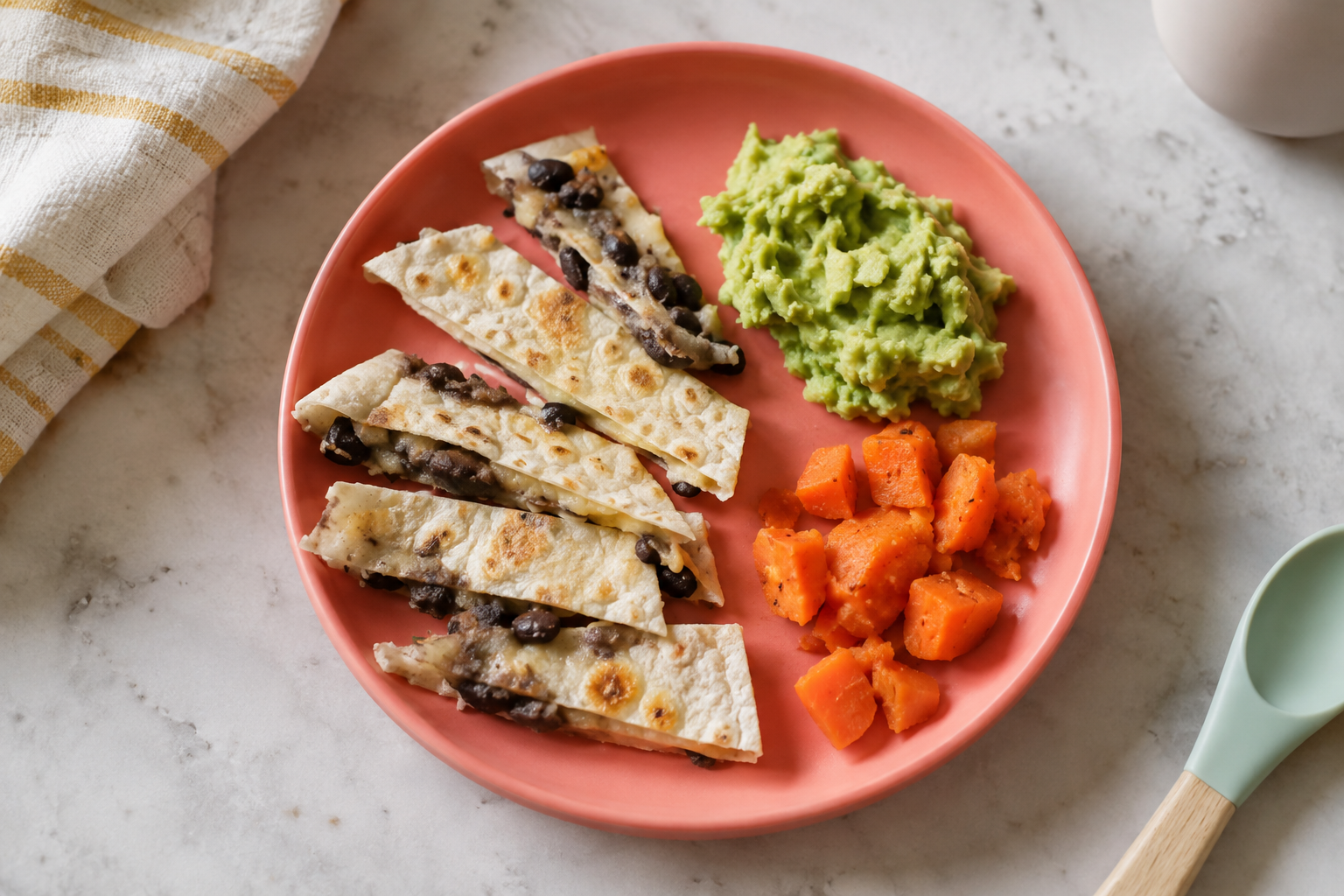
15. Mashed bean and cheese tortilla
How to make it: Mash cooked black beans until no firm whole beans remain. Spread two tablespoons thinly over a soft tortilla, add grated cheese, fold and warm through in a pan. Serve in manageable pieces.
Adapt it: Keep the tortilla soft and the filling thin. Serve avocado or soft carrots alongside for color and variety.
Make life easier: Rinse no-salt-added canned beans and mash a little extra for another meal.
16. Chicken pita, served open
How to make it: Warm a small pita just enough to soften. Add moist shredded cooked chicken and a little plain yogurt, or a tolerated alternative. Serve open-faced in pieces rather than as a thick, difficult pocket.
Adapt it: If the bread tears or the filling falls out, put the ingredients separately on the plate.
Make life easier: Use the same chicken batch as idea 14, changing only the bread and side.
9 toddler meals the family can share for dinner
Set aside the child’s portion before adding extra chili or salt, then adjust the texture. These ideas work best as one family meal with flexible serving.
17. Tomato pasta with mozzarella
How to make it: Cook small pasta until tender. Warm smooth tomato sauce, loosen with pasta water, and toss. Add a little grated mozzarella and stir until it has melted without long strands.
Adapt it: Offer sauce beside plain pasta for a child learning to accept it. Add mashed lentils only if that texture is welcome.
Make life easier: Freeze sauce in small portions; pasta tastes best cooked near serving time.
18. Deconstructed taco plate
How to make it: Serve soft rice, thoroughly mashed beans, finely grated cheese and mashed avocado in separate small portions. Add tender tortilla pieces if wanted, keeping strong salsa for the adults.
Adapt it: The child can choose what to touch or taste without the whole meal being coated in sauce.
Make life easier: Build adult tacos from the same ingredients, so this is one shared meal with two presentations.
19. Chicken meatballs with rice
How to make it: Use thoroughly cooked, soft chicken meatballs, crumbled finely rather than served as round balls. Moisten with sauce and pair with rice and very soft chopped broccoli. Ground poultry should reach 165°F/74°C.
Adapt it: Check packaged meatballs for firm pieces, bone fragments, ingredients and sodium. A homemade minced-chicken sauce is another option.
Make life easier: Freeze cooked portions promptly so a future meal only needs rice and a vegetable.
20. Soft potato with broccoli
How to make it: Bake or microwave a potato until completely soft, scoop out the flesh, and mash with a little olive oil or milk. Add finely chopped very soft broccoli and a little grated cheese.
Adapt it: Remove tough skin. Offer the broccoli beside the potato if your child dislikes mixed foods.
Make life easier: Microwave a small potato for the toddler while larger family potatoes finish cooking; timing varies with size.
21. Mild chicken curry and rice
How to make it: Warm tender cooked shredded chicken in a mild, smooth curry sauce your child has already tried. Serve a small spoonful beside soft rice rather than covering all of it. Add a soft cooked vegetable.
Adapt it: Keep hot chili out of the toddler portion. Check sauce labels for milk, nuts or other allergens.
Make life easier: Use one pan of chicken and divide before adding extra heat for adults.
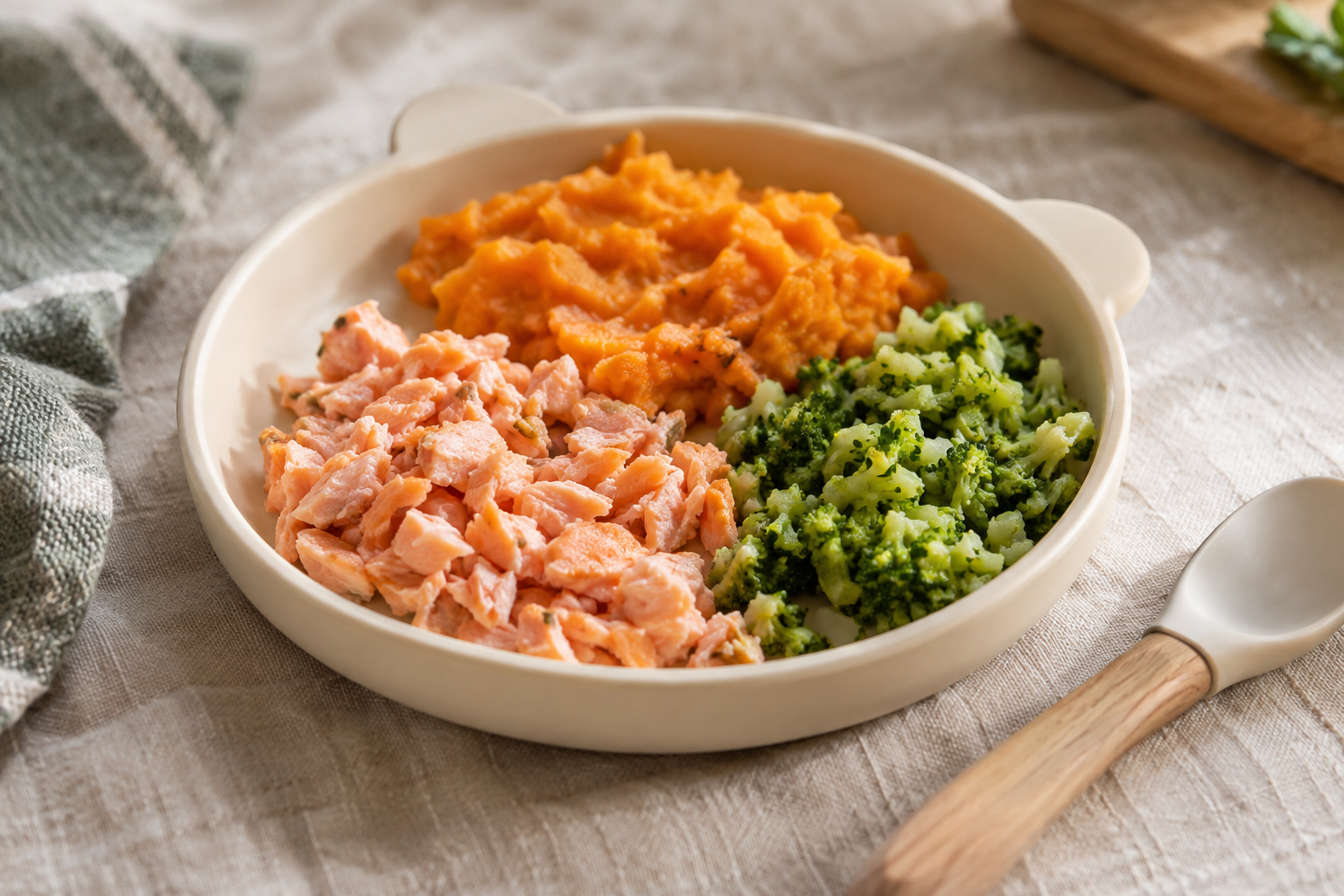
22. Salmon and sweet potato
How to make it: Cook salmon thoroughly to 145°F/63°C, check carefully for bones, and break into fine moist flakes. Serve with mashed cooked sweet potato and finely chopped, very soft broccoli.
Adapt it: Fish is an allergen. Use a tolerated food and adapt texture; the photo is a serving illustration, not a portion prescription.
Make life easier: Bake enough fish for the family and remove the toddler serving before adding salty toppings.
23. Soft burger bowl
How to make it: Cook ground beef thoroughly to 160°F/71°C and crumble finely. Serve with mashed potato, a little soft bread and very soft cooked vegetables rather than a thick assembled burger.
Adapt it: Moisten dry meat with sauce or broth. A smooth mashed-bean alternative can work for meat-free households.
Make life easier: The family can have burgers while the toddler gets manageable components from the same meal.
24. Breakfast-for-dinner plate
How to make it: Make fully cooked soft scrambled eggs, lightly toasted bread and mashed avocado. Add soft fruit or a cooked vegetable. Dinner does not need to resemble a traditional evening dish.
Adapt it: Choose two familiar components and one optional addition. Keep everything in small separate piles.
Make life easier: This is the emergency meal for evenings when the original dinner plan falls apart.
25. Soft vegetable egg rice
How to make it: In a lightly oiled pan, scramble an egg until fully cooked. Stir in cooked rice, very soft finely chopped carrots and mashed peas with a splash of water; heat thoroughly.
Adapt it: Keep it moist, skip salty sauces in the child’s serving, and avoid whole firm vegetable pieces.
Make life easier: Use promptly refrigerated rice and only make the portion you plan to serve.
A realistic five-day toddler meal plan
This is a rotation of ideas, not a requirement to eat specific amounts. Snacks and drinks are not shown. Repeat favorites and swap foods for allergies, access, appetite and your family’s preferences.
| Day | Breakfast | Lunch | Dinner |
|---|---|---|---|
| Monday | Banana oatmeal | Soft cheese quesadilla | Chicken and rice |
| Tuesday | Eggs and toast | Pea pasta | Salmon and sweet potato |
| Wednesday | Yogurt and soft pear | Mashed bean tortilla | Soft potato and broccoli |
| Thursday | Egg muffin | Chicken pita, open | Tomato pasta |
| Friday | Mini pancakes | Hummus and soft pita | Breakfast-for-dinner eggs |
A short, reusable shopping list
- Starches: oats, rice, small pasta, soft bread or pita, tortillas, potatoes and sweet potatoes.
- Protein and dairy: eggs, chicken, one fish meal, canned beans, plain yogurt and a small block of cheese, or suitable tolerated alternatives.
- Produce: bananas, soft pears or peaches, avocados, carrots, frozen peas and broccoli.
- Flavor and basics: olive oil, smooth tomato sauce, cinnamon and a low-sodium broth.
Before shopping, check what you already own and cross out meals that need too many new ingredients. Buying food for five breakfasts does not mean buying five different cereals.
Make-ahead prep without five days of leftovers
Choose two helpful tasks rather than an exhausting full-week cooking session. For example, bake egg muffins while steaming carrots, or cook a family portion of chicken while preparing tomorrow’s lunch components.
- Choose three repeatable meals. One breakfast, one lunch and one dinner are enough to start.
- Cook components separately. This keeps textures flexible and lets adults season their own food.
- Portion before serving. Keep the clean extra portion separate from food that has been handled or partially eaten.
- Date and cool promptly. Refrigerate promptly in shallow containers; do not leave a batch on the counter waiting for the evening.
- Freeze later-week portions. Use a midweek refresh for produce and fresh grains instead of relying on an entire week of refrigerator storage.
The FoodSafety.gov cold-storage chart gives 3–4 days for cooked meat or poultry, soups and baked egg casseroles in a refrigerator at 40°F/4°C or below. Follow the specific food’s guidance and product label. Thaw frozen portions in the refrigerator and reheat leftovers to 165°F/74°C, then cool the serving before your child eats. Smell is not a reliable safety test.
For daycare, ask about refrigeration and reheating. Pack perishables in an insulated bag with two cold sources when refrigeration is unavailable, and do not reuse returned perishable leftovers if you cannot verify how they were stored.
When toddler meals are not going to plan
“They only eat the plain part.”
Keep the plain component available. Try a tiny amount of sauce or another food beside it, without coating the whole meal. If every meal depends on convincing your child to taste something unfamiliar, both of you can end up exhausted. Familiar food provides a starting point, not a failure.
“They want the same dinner again.”
Repeat the dinner and change one optional element: a different soft fruit, a new pasta shape or the vegetable on the side. There is no need to change every ingredient at once. Keep a note of what is accepted so you can see patterns instead of relying on the memory of a stressful evening.
“They refuse the food after helping to make it.”
Participation is still useful even when tasting does not follow. A child can wash a vegetable, stir cooled ingredients or put napkins on the table without being required to eat a reward bite afterward.
“Dinner is always a battle.”
Look for practical barriers: is the child too tired, the food too hot, the chair uncomfortable, or the portion too large? Try one change at a time. Keep conversation neutral and avoid bargaining over bites. For persistent distress, a shrinking range of accepted foods, frequent coughing with meals, pain or concerns about growth, contact your pediatrician or a qualified feeding professional.
Toddler meals: frequently asked questions
How much should I serve?
There is no single portion that fits every toddler. Start with modest amounts of the meal components and offer more in response to hunger. The quantities above are preparation starting points, not instructions to finish the plate.
Can my toddler eat the same meal as us?
Often, yes, when the ingredients are appropriate and the shape, softness and seasoning are adapted. Set aside the child’s portion before adding extra heat, and remove bones or tough pieces.
What if my child will not eat vegetables?
Offer a tiny amount alongside familiar food, try a softer texture or serve it separately. Avoid making vegetables a condition for receiving another food. If the overall diet is very restricted, ask for professional advice.
Are these recipes suitable for children under 12 months?
This article is written for toddlers, not as a starting-solids guide. Babies have different feeding needs. Use age-appropriate guidance and advice from your healthcare professional rather than simply shrinking the portions.
Which meals are easiest without cooking?
Yogurt with soft fruit, cottage cheese with peaches, or hummus with soft bread are quick assembly options using suitable tolerated ingredients. Cold meals are still subject to refrigeration and allergy precautions.
Do I need 25 different meals every week?
No. Choose three to five that suit your family. The longer list is there to provide options, not another standard to meet.
Make the next meal simpler
Choose the meal you can make with the ingredients already in your kitchen. Write down one texture adaptation and one way to reuse a component tomorrow. That small plan is more useful than an ambitious menu nobody has time to cook.
For more family dinner inspiration, browse 7 easy meals under 30 minutes and adapt the texture to your child. The goal is a sustainable routine, not a perfect plate.
General educational information. Cooking times are estimates; use a food thermometer where appropriate. Food photos are illustrative, not serving-size prescriptions. Safety references: CDC choking hazards, FoodSafety.gov storage guidance and safe cooking temperatures.