Kid-friendly crock pot meals can turn a hectic afternoon into a calmer dinner: load the ingredients, choose the right setting, and come back to a tender meal that is easy to serve in familiar pieces. This guide gives you 10 practical slow-cooker dinners, exact starting quantities for a family of four, picky-eater swaps, a five-night plan, a consolidated grocery list, and food-safety guidance from official sources.
The goal is not to hide every vegetable or demand a clean plate. It is to make one family meal flexible enough that a child can begin with a familiar component while adults add toppings, texture, or heat at the table. If you need a broader rotation, save our kid-friendly dinner ideas too.
Quick answer: the easiest crock pot formula
Choose a mild protein or bean base, a familiar starch served separately, and a vegetable your family can manage. Use the ingredient and liquid amounts for the specific meal below; soup, stew, and shredded chicken need different ratios. These are meal ideas, not one interchangeable cooking formula. Cook until the food is tender and the protein reaches a safe internal temperature, then offer a familiar side such as rice, bread, noodles, tortillas, or potatoes. Slow cookers vary, so the times below are planning estimates—not claims from kitchen testing. Check your appliance manual and use a food thermometer.
In this guide
- Choose tonight’s meal by constraint
- Slow-cooker safety before you start
- 10 kid-friendly crock pot meals
- Five-night dinner plan
- Consolidated grocery list
- Weekend prep, storage, and reheating
- Troubleshooting picky-eater problems
- Frequently asked questions
Choose tonight’s meal by constraint
- Only 10 minutes to prep: shredded chicken tacos or salsa chicken bowls.
- No browning step: chicken-potato-carrot bowls, lentil sweet potato stew, or white bean chicken soup.
- Your child dislikes mixed foods: choose chicken-potato-carrot bowls; lift out cooked pieces and serve them separately. Food cooked in sauce will still taste of sauce.
- No dairy: choose chili, stew, soup, tacos, or pulled pork and use avocado instead of cheese or sour cream.
- Vegetarian tonight: lentil sweet potato stew, three-bean chili, or jackfruit sandwiches.
- You need freezer leftovers: chili, meatballs, lentil stew, and pulled pork generally hold their texture better than noodle soup.
Slow-cooker safety before you start
A slow cooker is convenient, but it is not a shortcut around safe handling. The USDA slow-cooker guidance recommends starting with a clean cooker and utensils, keeping perishables refrigerated until cooking time, thawing meat or poultry before placing it in the cooker, and following the manufacturer’s filling guidance. Cut large pieces into smaller chunks so they cook evenly.
Do not use the “warm” setting to cook raw food. If power goes out while you are away, discard the food even if it looks done. For doneness, check the thickest part with a food thermometer. The current FoodSafety.gov temperature chart lists 165°F/74°C for poultry, 160°F/71°C for ground beef or pork, and 145°F/63°C plus a three-minute rest for whole cuts of pork or beef. Recipes containing multiple ingredients should be checked in more than one place.
10 kid-friendly crock pot meals
Yield and equipment: these ideas are a starting point for approximately four family servings, not guaranteed tested yields. Use an appropriately sized cooker, typically 4–6 quarts, and follow its minimum and maximum fill guidance. Unless another size is stated, bean cans are 15 ounces, drained and rinsed. Use boneless, fully thawed chicken. A child’s appetite changes from day to day, so these are recipe quantities—not prescribed portions. Serve a small amount first and keep more available.
1. Mild shredded chicken tacos
Add: 1½ pounds boneless skinless chicken thighs, 1 cup mild salsa, ½ cup water, 1 teaspoon cumin, and ½ teaspoon garlic powder. Cook about 4–5 hours on low, or until the chicken is tender and reaches 165°F/74°C. Shred it in a bowl, moisten with a little cooking liquid, and serve with 8 small tortillas.
Picky-eater plate: keep some chicken lightly shredded and serve tortilla, avocado, corn, cheese, and salsa separately. For less sauce, lift the child’s portion out before stirring the juices back in. Leftover chicken works in quesadillas the next day.
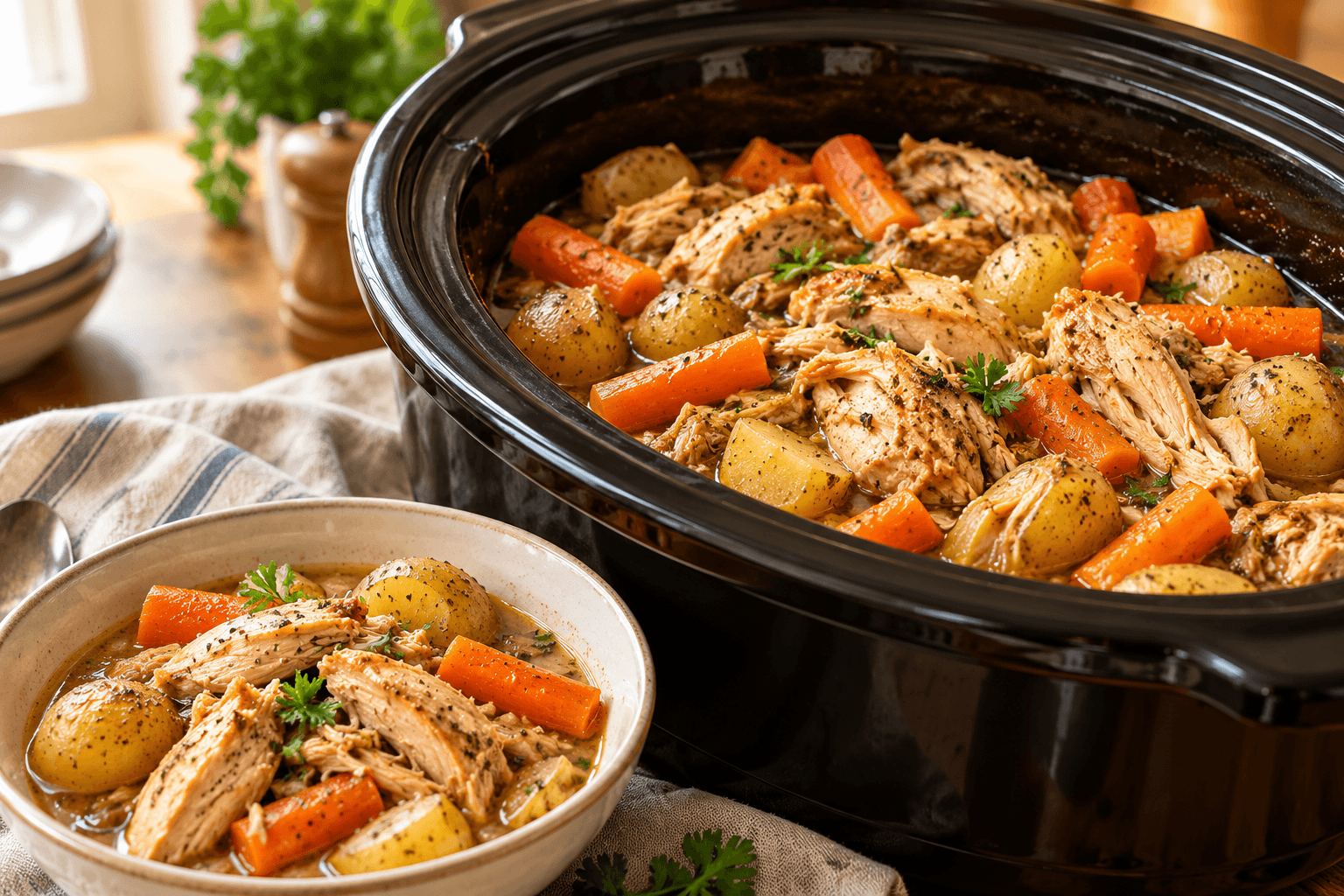
2. Chicken, potato, and carrot bowls
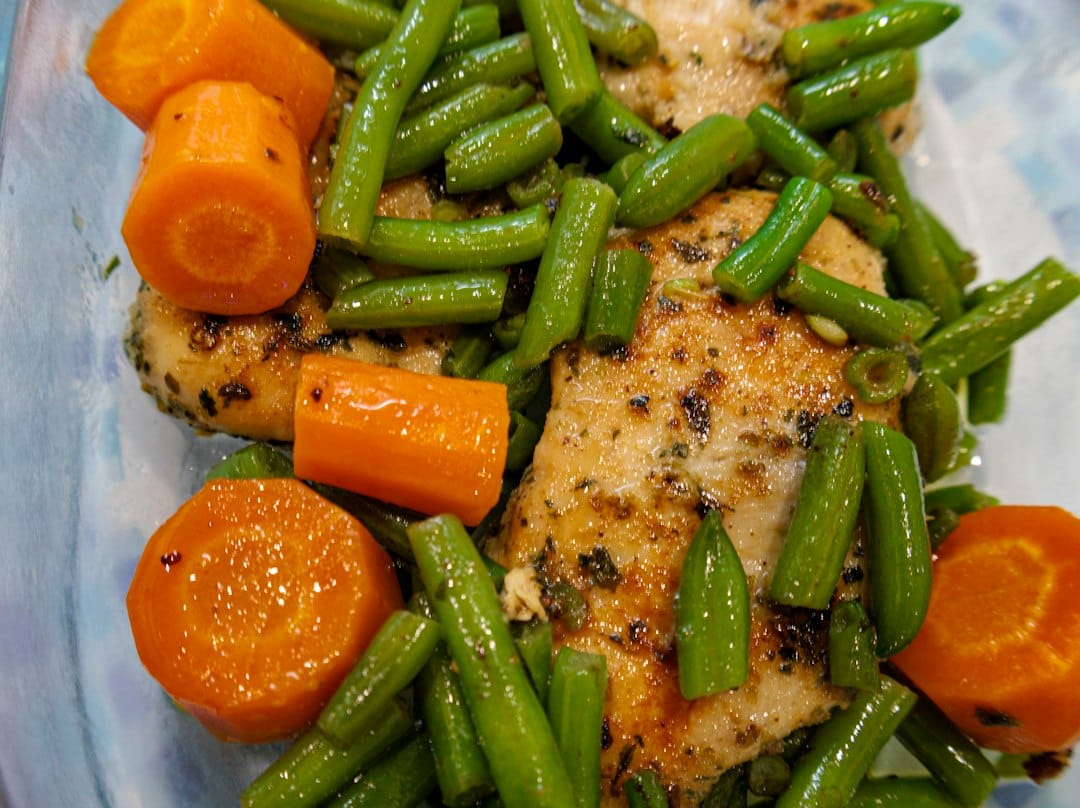
Add: 1½ pounds boneless chicken thighs, 1 pound baby potatoes halved, 4 carrots cut into short pieces, 1 cup low-sodium chicken broth, 1 teaspoon dried thyme, and ½ teaspoon onion powder. Cook about 5–6 hours on low. Verify the chicken reaches 165°F/74°C.
Make it flexible: serve the chicken, potato, and carrot in separate piles. Mash one potato with broth for a softer texture. Add lemon, mustard, or chopped herbs only to adult plates. Green beans can be stirred in during the final 30–45 minutes so they do not become overly soft.
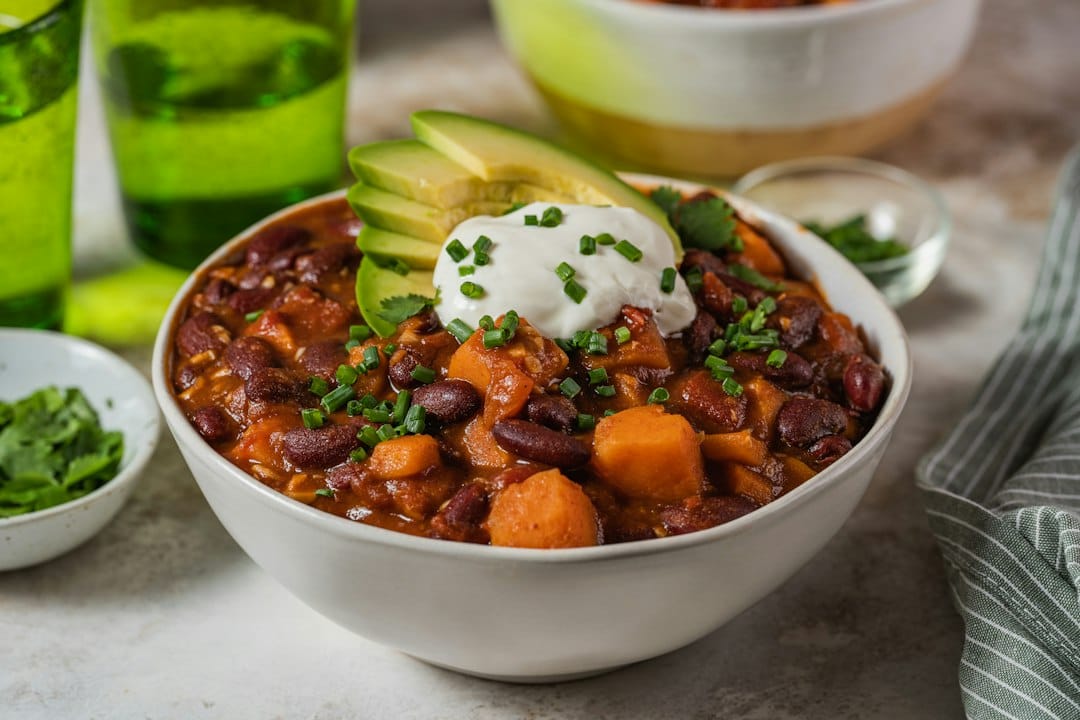
3. Turkey and bean chili
Use: 1 pound ground turkey fully cooked in a skillet to 165°F/74°C, 2 drained and rinsed 15-ounce cans of beans, 1 (28-ounce) can crushed tomatoes, 1 cup corn, 1 cup broth, 1 teaspoon cumin, and 1 teaspoon mild chili powder. Transfer the turkey immediately to the cooker with the other ingredients and cook 4–6 hours on low, following your appliance instructions. For a meatless version, replace the turkey with a third drained 15-ounce can of beans.
Texture option: mash some beans into the sauce for a thicker chili, or serve a drained spoonful beside rice for a child wary of stew. Put grated cheese, avocado, plain yogurt, and tortilla chips in small bowls so everyone builds a comfortable plate.
4. Chicken noodle soup
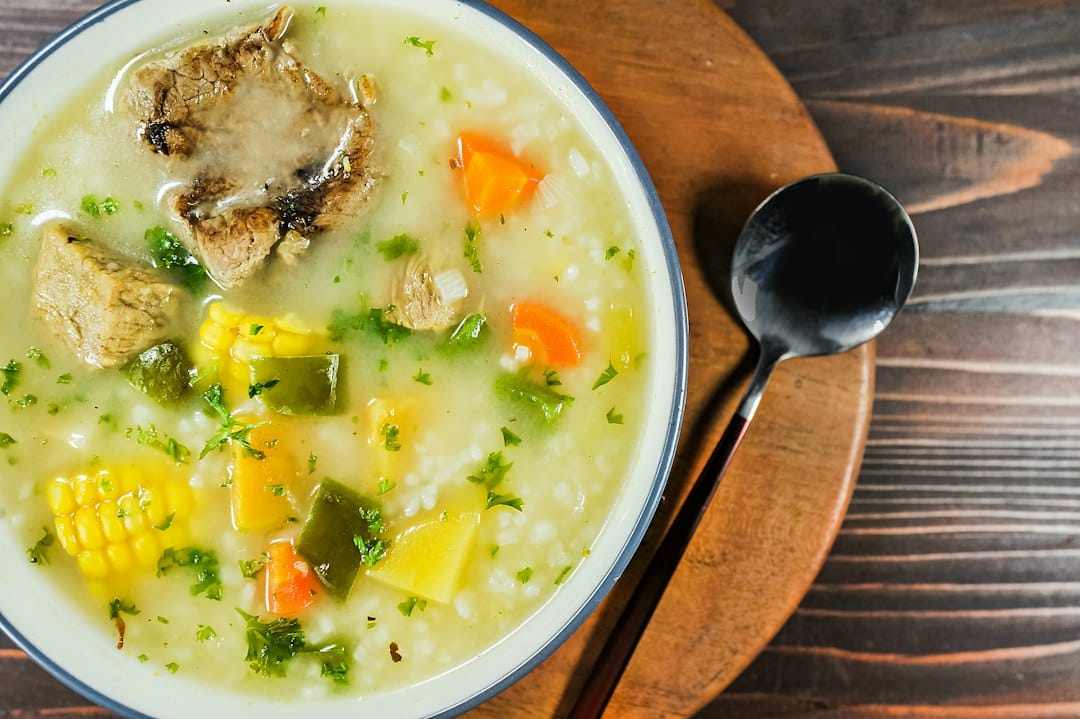
Add: 1½ pounds chicken thighs, 5 cups low-sodium broth, 3 carrots, 2 celery stalks, ½ diced onion, 1 teaspoon dried thyme, and a bay leaf. Cook about 5–6 hours on low, checking that the chicken reaches 165°F/74°C before removing and shredding it. Discard the bay leaf. Cook 6 ounces of noodles separately and add them to individual bowls so leftovers do not become mushy.
For a child who dislikes soup: use a slotted spoon to make a “deconstructed” plate of noodles, chicken, and carrots, with broth in a small cup for dipping. Never serve a bone or bay leaf to a child.
5. Lentil and sweet potato stew
Add: 1½ cups rinsed brown or green lentils, 1 medium sweet potato in ½-inch cubes, 1 (14.5-ounce) can diced tomatoes, 5 cups low-sodium vegetable broth, 1 teaspoon cumin, and ½ teaspoon smoked paprika. Cook about 6–7 hours on low until the lentils are fully tender. Add a splash of water if your cooker evaporates quickly.
Milder serving: stir a spoonful into rice or mash it slightly. Offer bread or a familiar cracker on the side. If tomato is a barrier, reduce it to half a can and replace the missing liquid with broth.
6. Beef and vegetable stew
Add: 1½ pounds beef stew meat, 1 pound potatoes, 3 carrots, 1 cup peas, 2½ cups low-sodium beef broth, 1 tablespoon tomato paste, and 1 teaspoon thyme. Brown the beef first if time allows for deeper flavor, though the meal still works without browning. Cook 7–8 hours on low, adding peas near the end.
Texture check: beef should be fork-tender, not chewy. Cut the child’s pieces across the grain into developmentally appropriate bites. For toddlers, review the safe serving guidance in our toddler meals guide.
7. Meatballs in mild tomato sauce
Add: 20 small, raw, fully thawed meatballs (about 1¼ pounds total), 24 ounces low-sodium marinara, and ½ cup water. Follow the meatball package and cooker instructions; allow roughly 4–6 hours on low as a planning estimate. Check several centers: beef or pork meatballs need 160°F/71°C; poultry meatballs need 165°F/74°C. If using already-cooked meatballs, reheat them with the sauce on the stove or in the oven to 165°F/74°C first; use a preheated slow cooker only to keep them hot at 140°F/60°C or above.
Serve with 8 ounces of cooked pasta, polenta, or small rolls. A sauce-sensitive child can have the meatball wiped lightly and pasta dressed with olive oil. Cut round meatballs into small pieces for younger children rather than serving them whole.
Want the next two weeks planned too?
Turn these flexible dinners into a calmer routine with a parent-friendly plan, adaptable meals, and an organized shopping approach.
8. Salsa chicken rice bowls
Add: 1½ pounds chicken thighs, 1½ cups mild salsa, 1 can rinsed black beans, and 1 cup frozen corn. Cook 4–5 hours on low until the chicken reaches 165°F/74°C, then shred. Cook rice separately according to its package directions; do not improvise with uncooked rice in the slow cooker unless your appliance recipe gives tested amounts.
Set out 3 cups cooked rice, avocado, grated cheese, lettuce, and lime. For a low-mixing plate, keep rice, beans, corn, and chicken apart. For a vegetarian bowl, replace chicken with an extra can of beans and add the beans late enough that they retain shape.
9. White bean chicken soup
Add: 1¼ pounds chicken thighs, 2 cans rinsed cannellini beans, 5 cups broth, 2 sliced carrots, and 1 teaspoon Italian seasoning. Cook about 5–6 hours on low until the chicken reaches 165°F/74°C. Remove and shred it, then stir in 2 cups baby spinach and cook until wilted.
Blend one cup of beans and broth for a creamy texture without dairy, or leave everything chunky. Serve toast soldiers for dipping. If spinach is unfamiliar, place a few cooked leaves on the learning side of the plate rather than mixing extra into the child’s bowl.
10. Pulled pork or jackfruit sandwiches
Pork version: place a 2-pound pork shoulder with ½ cup broth, 1 teaspoon smoked paprika, ½ teaspoon garlic powder, and ½ cup mild barbecue sauce in the cooker. Cook 8–9 hours on low until tender; confirm at least 145°F/63°C with a three-minute rest, though shoulder is usually cooked longer for shredding. Skim excess fat, shred, and add sauce to taste.
Plant-based version: drain 3 cans young green jackfruit, rinse, pull apart, and cook with 1 cup beans, ¾ cup barbecue sauce, and ½ cup water for 3–4 hours on low. Serve on small rolls with cucumber sticks or slaw on the side. Sauce can be served separately for children who prefer plain bread and filling.
A five-night crock pot dinner plan
Monday: shredded chicken tacos
Make an enlarged batch of recipe 1: 2½ pounds chicken thighs, 1½ cups mild salsa, ¾ cup water, 1½ teaspoons cumin, and ¾ teaspoon garlic powder. Use a cooker large enough to stay within its recommended fill level; check doneness rather than assuming the larger batch takes the same time. Reserve about 2 cups cooked shredded chicken in a shallow container for Tuesday and refrigerate promptly. Serve the remaining chicken with 8 small tortillas, 1 cup heated corn, and optional avocado and cheese.
Tuesday: leftover chicken rice bowls
Reheat Monday’s reserved chicken on the stove or in the microwave to 165°F/74°C. Cook 1 cup dry rice separately, and heat 1 drained 15-ounce can of black beans with 1 cup corn. Serve as bowls or separate components with optional avocado. If Monday leaves less chicken than expected, use extra beans rather than stretching portions to fit the plan.
Wednesday: turkey and bean chili
Make recipe 3, fully cooking the turkey in the skillet immediately before assembling the cooker. Serve with rice made from 1 cup dry rice and optional cheese. Offer enough for everyone; freeze only what remains after dinner. Do not assume half the batch will feed your household.
Thursday: chicken noodle soup
Cook the soup base during the day and boil noodles shortly before dinner. Keep noodles separate in storage. Offer a deconstructed version if mixed textures are difficult.
Friday: meatball sandwiches
Make recipe 7 with raw, fully thawed meatballs and check their internal temperature. Serve on 4 large or 8 small rolls, with fruit and a familiar vegetable. For precooked meatballs, follow the stovetop or oven reheating method in recipe 7. Freeze any leftovers promptly for another dinner.
Consolidated shopping list for the five-night plan
Protein and dairy
- 4 pounds boneless skinless chicken thighs: 2½ pounds for Monday/Tuesday and 1½ pounds for Thursday
- 1 pound ground turkey
- 20 small raw meatballs, about 1¼ pounds total; freeze until needed and thaw in the refrigerator
- 8 ounces grated cheese
- Plain yogurt or sour cream, optional
Produce
- 2 avocados, optional toppings
- 3 medium carrots
- 2 celery stalks
- ½ onion
- 1 lime
- 1 head lettuce or bag of shredded lettuce
- Fruit for five dinners
- One easy vegetable such as cucumber, bell pepper, or green beans
Pantry and freezer
- 8 small tortillas
- 2 cups dry rice: 1 cup Tuesday and 1 cup Wednesday
- 3 (15-ounce) cans beans: 1 black bean can Tuesday, 2 cans Wednesday
- 1½ cups mild salsa; a 16-ounce jar gives room for optional toppings
- 1 (28-ounce) can crushed tomatoes
- 3 cups frozen corn: 1 cup each Monday, Tuesday, and Wednesday
- 6 ounces noodles
- 24 ounces marinara
- 4 large or 8 small sandwich rolls
- 6 cups low-sodium broth: 1 cup for chili and 5 cups for soup (buy two 32-ounce cartons)
- 2½ teaspoons cumin, 1 teaspoon mild chili powder, 1 teaspoon thyme, ¾ teaspoon garlic powder, and 1 bay leaf
Check your pantry before shopping. The list assumes the Monday chicken is reused on Tuesday and the remaining meals are made at the family-of-four quantities above. Adjust for household size and leftovers.
Weekend prep, storage, and reheating
- Wash and cut sturdy vegetables. Refrigerate them in labeled containers for up to the shorter of their usual storage life or the recipe day.
- Mix mild seasoning packets for tacos, chili, and soup so weekday assembly takes a minute.
- Freeze raw meat or poultry you will not cook within its safe refrigerator window. For this menu, thaw Thursday’s chicken and Friday’s meatballs in the refrigerator in time for cooking; do not store all the week’s raw meat in the fridge from Sunday onward.
- Label freezer containers with the meal, date, and reheating note before you are holding a hot pot.
- Keep delicate additions—noodles, dairy, spinach, fresh herbs, avocado, and crunchy toppings—separate until serving.
The USDA leftovers guidance says to refrigerate perishable food within two hours (one hour above 90°F/32°C), use shallow containers for rapid cooling, use most cooked leftovers within 3–4 days, and reheat leftovers to 165°F/74°C. Do not reheat cold leftovers in a slow cooker. Heat them first on the stove, in the microwave, or in the oven to 165°F/74°C; a preheated slow cooker may then hold them at 140°F/60°C or above.
Freeze portions you will not use within that window. Soups, chili, shredded meats, and meatballs can be frozen in practical meal-size portions; quality is best when noodles, rice, and fresh toppings are stored separately. Thaw safely in the refrigerator, cold water, or microwave—not on the counter.
Ways to make one meal work for different eaters
- Serve one dependable item with the meal: bread, rice, tortilla, fruit, yogurt, or another food your child commonly accepts.
- Keep extra sauce and toppings separate. A portion lifted out of a saucy cooker is less coated, not completely plain; offer a familiar side without promising an unsauced flavor.
- Use toppings as choices, not pressure. Two toppings are enough; a crowded bar can overwhelm some children.
- Start with a small serving. A child can ask for more, while a large bowl may feel like a demand.
- Let heat and strong herbs be adult add-ons. Mild does not have to mean bland: use garlic, thyme, cumin, lemon, or Parmesan selectively.
- If tonight must be faster than a slow cooker allows, use our easy meals under 30 minutes.
Troubleshooting common slow-cooker problems
The meal is watery
Lift the lid only near the end. Transfer some liquid to a saucepan and reduce it, or stir in a slurry of 1 tablespoon cornstarch with 1 tablespoon cold water and cook on high until thickened. For chili, mash a scoop of beans. Do not add dry flour directly; it clumps.
The vegetables are mushy but the meat is not tender
Cut dense vegetables into larger pieces and place them where your manufacturer recommends. Use the right cut: chicken breast dries sooner than thighs, while beef stew meat needs more time. Confirm that the cooker is neither underfilled nor overfilled according to its manual.
My child refuses foods touching
Use a divided plate. Remove a small piece of cooked protein, a vegetable, and the familiar starch before combining the adult servings. This is presentation, not a separate dinner.
The flavor is too strong
Dilute a child’s portion with plain rice, potato, noodles, or unsalted beans. Next time, halve the sauce and offer more at the table. Choose mild salsa and check packaged sauce for sodium and heat.
Dinner is not ready on time
Do not serve partly cooked poultry or meat. Check the temperature, then finish safely by a faster method if appropriate and supervise it closely. Keep a backup dinner such as eggs and toast, frozen soup, or beans and rice. More options are in our dinner ideas for picky eaters.
Make picky-eater planning less repetitive
The 14-Day Picky Eater Meal Plan gives you a ready-made framework while still leaving room for familiar sides and family preferences.
Frequently asked questions
Can these dinners cook while I am at work all day?
Match the meal to the time you will be away. A chicken dish with a 4–5-hour estimate is not an 8–10-hour recipe; extra time can dry it out. Beef stew or pork shoulder may fit a longer day better, depending on your cooker and the cut. Follow your appliance instructions for automatic warming, and keep cooked food at 140°F/60°C or above. Never use a delayed start that leaves raw meat sitting at room temperature.
How can I adapt the meals for food allergies?
Check every packaged ingredient, especially broth, sauces, meatballs, noodles, tortillas, and rolls. For example, meatballs can contain egg, milk, or wheat even when the sauce does not. Choose a suitable verified substitute, keep utensils separate where needed, and follow your family’s allergy plan. A topping served separately does not remove an allergen already cooked into the meal.
Can I put frozen chicken directly in a slow cooker?
The USDA recommends thawing meat or poultry before slow cooking. Frozen pieces can spend too long warming through. Thaw in the refrigerator, cold water, or microwave, then cook promptly.
Can I prepare the crock the night before?
You can chop and refrigerate ingredients in separate covered containers. Because a cold ceramic insert may heat slowly or crack from temperature shock, follow your slow-cooker manufacturer’s instructions before refrigerating the insert or placing it into the heating base.
Which vegetables hold up best?
Carrots, potatoes, sweet potatoes, winter squash, onions, and celery tolerate long cooking. Peas, spinach, green beans, zucchini, dairy, and fresh herbs are usually better added later.
How do I keep chicken from drying out?
Choose thighs for longer cooking, keep enough liquid in the recipe, avoid lifting the lid repeatedly, and begin checking near the early end of the time range. Cook only until safely done and tender.
Are these meals suitable for toddlers?
Many can be adapted, but texture and shape matter. Remove bones, shred or cut meat appropriately, soften firm vegetables, avoid whole round foods, and supervise eating. Individual allergies, medical needs, and feeding concerns should be discussed with the child’s clinician.
Do I need to brown meat first?
Browning improves flavor and color and is necessary in this guide for ground turkey before it is combined with other ingredients. Whole cuts can often go in without browning if the recipe and appliance instructions allow, but they still must reach the safe temperature.
How long can leftovers stay in the refrigerator?
Most cooked leftovers should be used within 3–4 days when cooled promptly and stored at 40°F/4°C or below. When in doubt about time or temperature, discard the food.