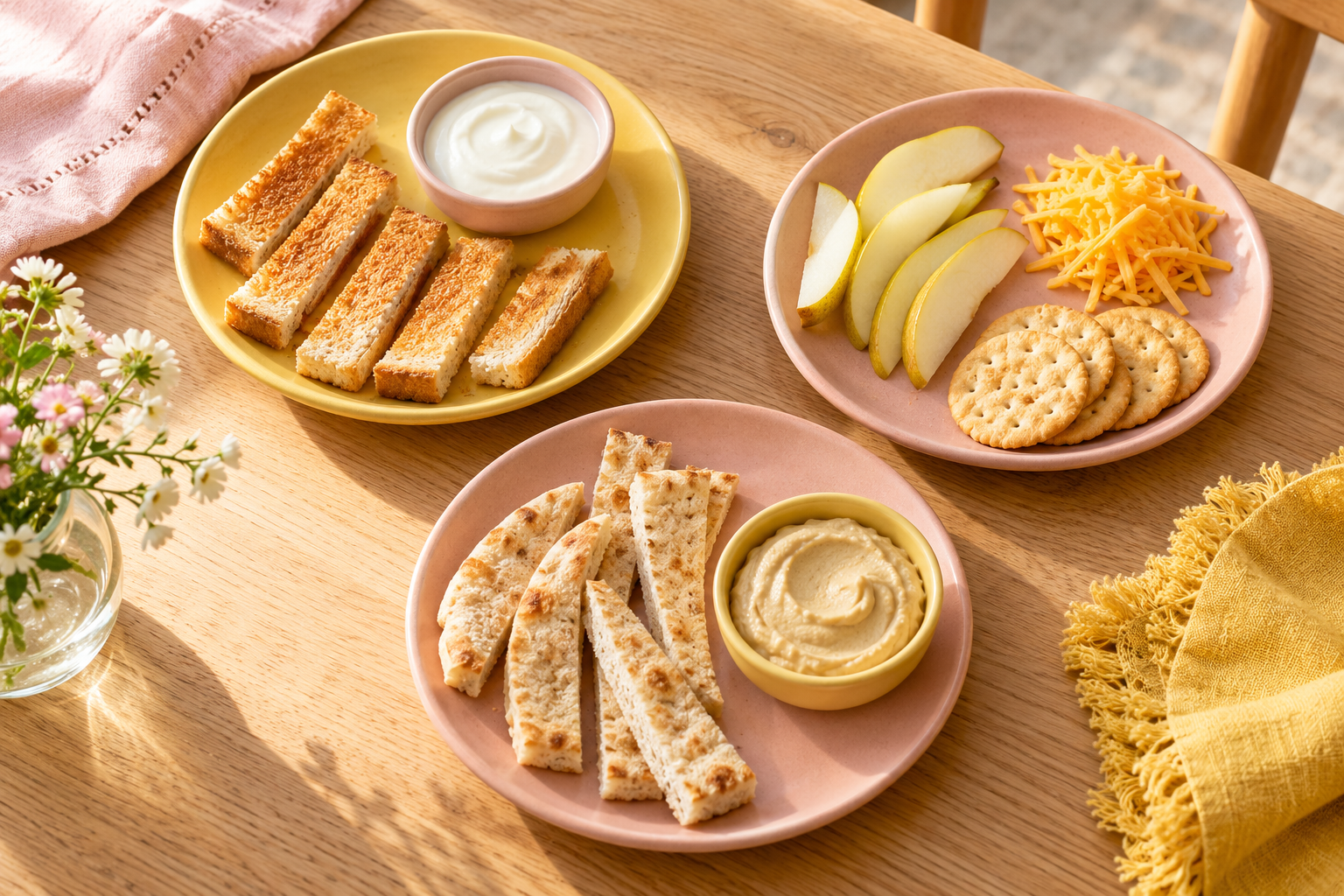
The crackers were fine yesterday. Today they are “too different” because they came out of a new box. Meanwhile, dinner is still an hour away. Finding snacks for picky eaters is often less about discovering a clever recipe and more about getting the familiar details right.
Start with a food your child already eats, keep its preferred texture, and offer a simple companion separately. Yogurt with toast beside it, banana with a thin spread on bread, or crackers with grated cheese can be useful starting points. You do not have to turn every snack into a recipe or a tasting lesson.
This guide is for parents of preschool and early elementary children, roughly ages 4–8. It includes 12 practical combinations, a five-day rotation with matching shopping quantities, a packing check and a small decision card you can copy. Adjust every food to your child’s chewing skills, allergies and individual needs; the quantities are preparation examples, not amounts a child must finish.
Choose the snack by the problem you need to solve
Before opening the cupboard, ask: What is familiar? What texture works? When is the next meal? Those answers narrow the choices much faster than a list of fifty foods.
- Only smooth foods feel manageable: start with a familiar yogurt or applesauce, with another accepted food beside it rather than stirred in.
- Wet food cannot touch dry food: use two small dishes. A divided box is only useful if moisture cannot travel between compartments.
- Your child wants something to hold: try toast fingers, soft pita strips or waffle strips prepared to their abilities.
- You have two minutes: pair an accepted ready-to-eat food with fruit or a suitable dairy food; skip the cooking project.
- You are leaving home: choose the snack around the cold storage you can actually provide.
- Dinner is nearly ready: consider bringing the meal forward or offering an available component of that meal. Avoid promising a precise snack size will produce a better dinner appetite.
For a fuller snack, you can combine a grain or starchy food, a protein food, and fruit or vegetables. But every snack does not need to contain every group. The American Academy of Pediatrics’ guidance on building balanced snacks treats variety across the day as important, rather than requiring each snack to be a miniature complete meal.
Keep the familiar food recognizable
“My child likes yogurt” may really mean smooth strawberry yogurt, cold, in a small bowl, with nothing sprinkled on top. Write down that level of detail before buying a large tub of a different variety.
Try keeping the accepted part unchanged while offering a possible companion. If toast is familiar, put the dip next to it. If banana is familiar, offer it beside the yogurt. Mixing everything together removes the option to eat the components separately.
A new food is optional in the examples below. A snack can simply provide food between meals. Forcing a taste or making a favorite food conditional on trying something else adds a different problem; the AAP’s picky-eating advice recommends avoiding pressure and food bribes.
12 snacks for picky eaters, with practical serving adjustments
These are assembly ideas, not kitchen-tested recipes or a nutrition prescription. Begin with a manageable serving and make more available. Keep any substitutions compatible with allergies and the setting’s rules.
1. Smooth yogurt with toast fingers
Spoon about ⅓ cup of a familiar yogurt into a bowl and offer half a slice of toast alongside. Leave the toast out of the yogurt until your child chooses to dip it. If toasted bread is too dry, use the familiar bread texture instead.
The useful detail: keep fruit pieces and crunchy toppings separate. A change from smooth to lumpy can matter more than the flavor name.
2. Banana and a thin spread on bread
Use half a slice of bread, about 1 teaspoon of an accepted smooth nut or seed butter spread thinly, and half a small banana prepared appropriately. Offer the banana beside the bread if toppings are difficult. Nut and seed butters are optional; cream cheese may work for a child who can eat dairy.
Check the actual ingredients and school rules. Sunflower-seed butter is not automatically suitable for every allergy or classroom.
3. Crackers, grated cheese and soft pear
Offer 4–6 familiar crackers, 2 tablespoons grated cheese and about ¼ cup soft ripe pear, prepared for your child. Use a separate dry dish for the crackers. Hard, seeded or very tough crackers may be unsuitable; choose the texture your child can manage.
There is no need to build little sandwiches. Someone who dislikes stacked food may prefer to pick up each component separately.
4. Applesauce with a small piece of cheese toast
Serve about ¼ cup applesauce with half a slice of toast topped with a little grated cheese. Melt the cheese if that texture is familiar, then cool appropriately. Otherwise, leave it separate.
Plain applesauce and cinnamon applesauce can feel like different foods. Use the accepted version rather than quietly changing the flavor.
5. Soft pita strips with a familiar dip
Cut half a small soft pita into manageable strips and offer 2 tablespoons hummus or smooth mashed white beans. If dip is unfamiliar, begin with a small optional amount beside a sufficient familiar snack.
Hummus commonly contains sesame. For a new variation, change either the bread or the dip first, rather than both at once.
6. Waffle strips with yogurt on the side
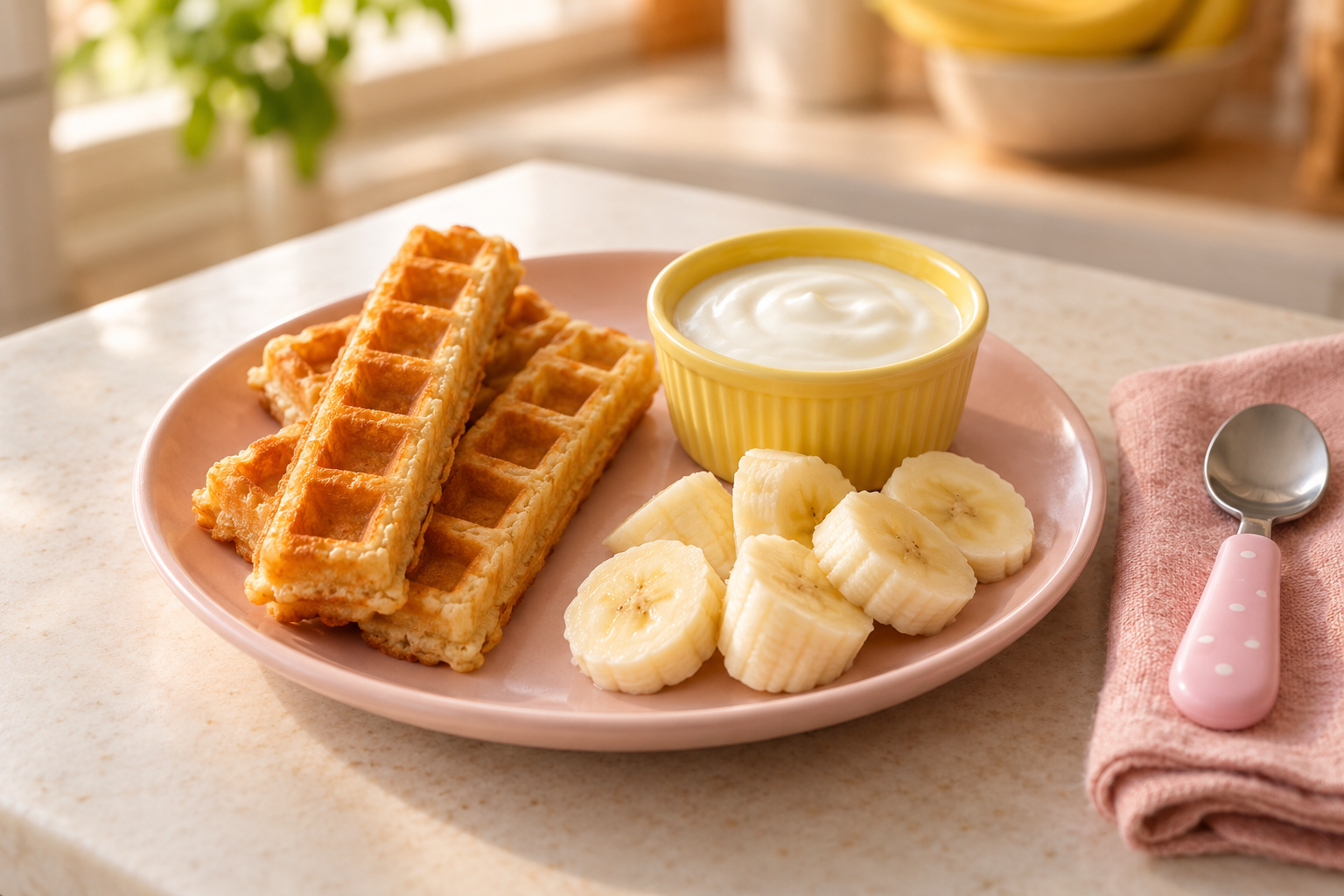
Prepare one small waffle according to its package, let it cool to a suitable temperature and cut into strips. Offer about ¼ cup yogurt separately. Keep the surface plain if toppings make the waffle unacceptable.
A waffle does not have to be crisp. Use the version your child already manages, and check labels for egg, milk, wheat or other relevant allergens.
7. Soft pear with cottage cheese, together or apart
Offer about ¼ cup cottage cheese and ¼ cup soft ripe pear. If cottage cheese is already familiar but the fruit is not, keep the fruit in a different dish. If the curds are the problem, choose an accepted smooth yogurt rather than insisting this particular pairing must work.
8. Warm oatmeal with banana beside it
Prepare a small amount of oats using the package directions and serve about ⅓ cup cooked oatmeal with part of a banana alongside. Let it cool before serving. Add liquid gradually if the oats thicken while standing.
Keep the familiar consistency. A child who accepts loose porridge may reject the same oats once they become a stiff mound.
9. Avocado bread with an optional squeeze of lemon
Spread 1–2 tablespoons smooth mashed avocado thinly on half a slice of bread, or offer the mash separately. Make it close to serving so the color and texture are predictable. Add lemon only to the portion of someone who wants it.
10. Plain cereal and yogurt in separate bowls
Choose an age-appropriate cereal your child can chew comfortably and serve a small handful alongside about ⅓ cup yogurt. If dry cereal is not suitable, soften it appropriately or use another idea. Keep crunchy cereal out of yogurt until eating so it does not turn unexpectedly soft.
11. Mashed beans with a soft tortilla
Mash about 2 tablespoons drained canned white beans with a little water until smooth. Offer with half a small soft tortilla, warmed if preferred. There is no need to turn this into a folded quesadilla or add hidden vegetables.
This is useful when the household already has beans open for another meal. Use them within the applicable storage limit on the package or your food-safety guidance.
12. A half-size version of an accepted sandwich
Use one slice of bread folded around a familiar filling, or serve the bread and filling separately. Choose a simple option such as a thin layer of suitable spread or grated cheese. Cut to a manageable shape and add a little fruit if wanted.
The point is not to introduce a new “snack recipe.” It is to use something dependable in an amount that fits the eating occasion.
A five-day snack rotation using a short shopping list
Here is one snack opportunity per day for one child, using five ideas above. It is not a full day’s food plan. Repeat, reduce or increase the preparations according to your household; nothing needs to be finished.
| Day | Preparation amounts | Keep separate |
|---|---|---|
| Monday | ⅓ cup yogurt + ½ slice bread or toast | Yogurt and bread |
| Tuesday | ½ small banana + ½ slice bread + 1 tsp suitable spread | Banana if toppings are difficult |
| Wednesday | 4–6 crackers + 2 tbsp grated cheese + ¼ cup soft pear | Dry crackers and fruit |
| Thursday | ½ small soft pita + 2 tbsp suitable dip | Pita and dip |
| Friday | 1 small waffle + ¼ cup yogurt | Waffle and yogurt |
Pick the days around your actual schedule. If Friday’s waffle works well on Monday too, repeating it is an organizational choice, not a failure.
Shopping quantities for that five-day rotation
- Yogurt: 7/12 cup total, or ⅓ cup plus ¼ cup. A small tub with at least that amount covers the example.
- Bread: 1 slice total, split between Monday and Tuesday.
- Banana: ½ small banana used; plan the other half for someone else rather than cutting a whole week ahead.
- Smooth nut or seed butter, or a suitable alternative: 1 teaspoon.
- Crackers: 4–6.
- Grated cheese: 2 tablespoons.
- Soft ripe pear: ¼ cup prepared.
- Small soft pita: ½.
- Hummus or smooth bean dip: 2 tablespoons.
- Small waffle: 1.
These are amounts used, not package sizes. Check the fridge first. Freeze suitable spare bread or waffles according to their instructions, and use remaining cheese, pita or beans in other household meals. Choose substitutes before shopping, then update the quantities rather than buying both versions automatically.
For a complete packed meal, use our cold lunch ideas for kids. For evening cooking, see dinner ideas for picky eaters. This snack rotation is deliberately smaller than either.
Pack snacks so the texture survives
Keep wet and dry foods in independently sealed containers. An applesauce compartment beside crackers can still make them soft if the lid does not separate the spaces. Put dips in a small leakproof cup and check that your child can open it without help.
Yogurt, cheese, prepared dips and other perishables need reliable cold storage. FoodSafety.gov recommends two cold sources for perishable packed lunches and snacks, with refrigeration or a cooler when available. “It is just a snack” does not remove that requirement.
If cold storage is unavailable, choose suitable products specifically labeled shelf-stable and follow their instructions after opening. Do not assume a yogurt pouch or cheese snack is shelf-stable because it comes in sealed packaging.
Safety and substitutions before you serve
Food shape, hardness and stickiness matter. The CDC’s choking guidance recommends preparing food for the child’s development, supervising eating and keeping children seated upright. Whole nuts, popcorn, hard raw apple or carrot chunks, whole grapes and thick spoonfuls of nut butter can be hazards for young children. Use appropriate preparation rather than assuming a small portion is automatically safe.
For children younger than this guide’s age range, start with our toddler food preparation and texture guide and individual professional advice where needed. For allergies, check all labels and cross-contact precautions. “Dairy-free,” “vegan” and “nut-free” do not mean free of every allergen, and alternative products do not necessarily provide the same nutrients.
When the snack still does not work
“They only want the crackers.”
Notice what happened without making the next snack a negotiation. Was the companion unfamiliar, too wet, too cold or simply unwanted? Keep a brief note and change one practical detail another time. Do not hide the other food inside the accepted crackers and expect the snack to feel the same.
“They ask for snacks all afternoon.”
Look at when lunch happened, how much time school allowed for eating, activity and the timing of dinner. A predictable routine can help you organize food, but a clock cannot tell you exactly how hungry a child is. Review persistent appetite or intake concerns with their clinician rather than imposing a rigid restriction.
“The new brand was rejected.”
Compare the details: shape, thickness, smell, packaging and texture. Keep the familiar version available when possible and offer any new version transparently. A swap that looks minor to an adult may be a noticeable change to the child.
“Every snack takes too much effort.”
Choose three dependable combinations and repeat them. Keep the needed dishes together, identify one cupboard option and one refrigerated option, and stop designing a different snack every day.
For a downloadable planning sheet, use our free printable and fillable meal-prep worksheet. It was designed for meals, so adapt it for your snack choices; it is not a separate snack tracker. Our component-prep guide explains the same keep-it-separate approach for dinners.
Frequently asked questions
What are easy snacks for picky eaters?
Start with an accepted food and a simple optional companion: yogurt with toast, bread with banana, crackers with grated cheese, or soft pita with a suitable dip. Familiar texture and presentation are often more useful planning details than a complicated new recipe.
What if my child will not eat dips?
A dip is optional. Offer the bread or other familiar component in its usual form and choose another accepted companion if available. Putting sauce in a separate cup should create a choice, not an obligation to use it.
Can I use packaged snacks?
Yes. Check suitability for chewing skills, allergens and storage, and compare products in the context of the foods your household uses. A package can be practical; it does not need to be marketed specifically to picky eaters.
Should every snack include a new food?
No. Snack time can simply be a predictable opportunity to eat. If you offer something unfamiliar, keep the familiar food available and avoid making tasting a condition of eating it.
When should I ask for help with selective eating?
Speak with your child’s healthcare professional if eating is painful, chewing or swallowing is difficult, growth is a concern or the accepted range is becoming very restricted. This guide organizes snack preparation; it cannot assess or treat a feeding difficulty.
For tomorrow, choose one combination you already have ingredients for. Keep the familiar part familiar and note the serving detail that made it easier to prepare. If you want a broader paid planning resource, the printable and fillable Peaceful Mealtimes guide is a separate option to explore.